| Price per person | No of people |
|---|---|
| $2,300 - $4,100 | 2+ |
Price range 2300-4100 USD, please contact with us to get personal quotation.
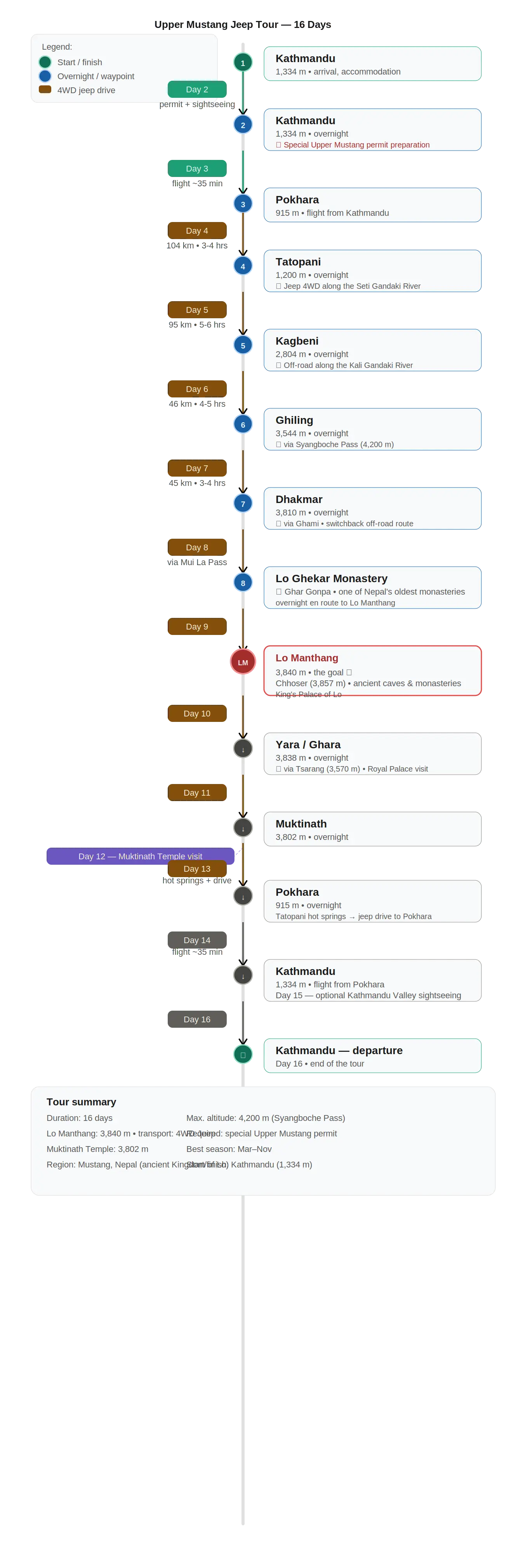
Jeep Tour Program briefing with official arrangements. Overnight at a hotel in Kathmandu.
After breakfast, join our tour guide to explore Kathmandu Valley’s cultural and historical UNESCO World Heritage sites. We’ll begin at Boudhanath, home to the impressive Boudhanath Stupa, one of the largest Buddhist shrines in the world, where you can witness Buddhist monks in prayer. Next, we’ll visit Pashupatinath, Nepal’s most revered Hindu temple, along the sacred Bagmati River. At this site, you will see Hindu holy men (sadhus) meditating, pilgrims bathing in the river, and occasionally, funeral pyres burning on the ghats, highlighting the blend of spirituality and tradition. Overnight at a hotel in Kathmandu.
If you do not want to fly, we can arrange different transportation to Pokhara: a tourist bus or a private vehicle. The drive takes approximately 6-7 hours, and the bus will take 8-10 hours. Overnight at a hotel in Pokhara.
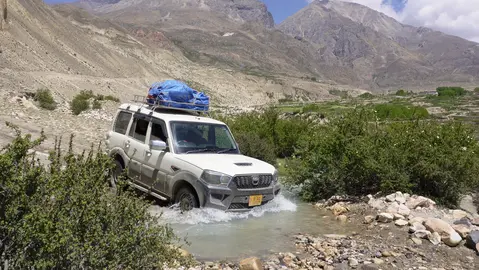
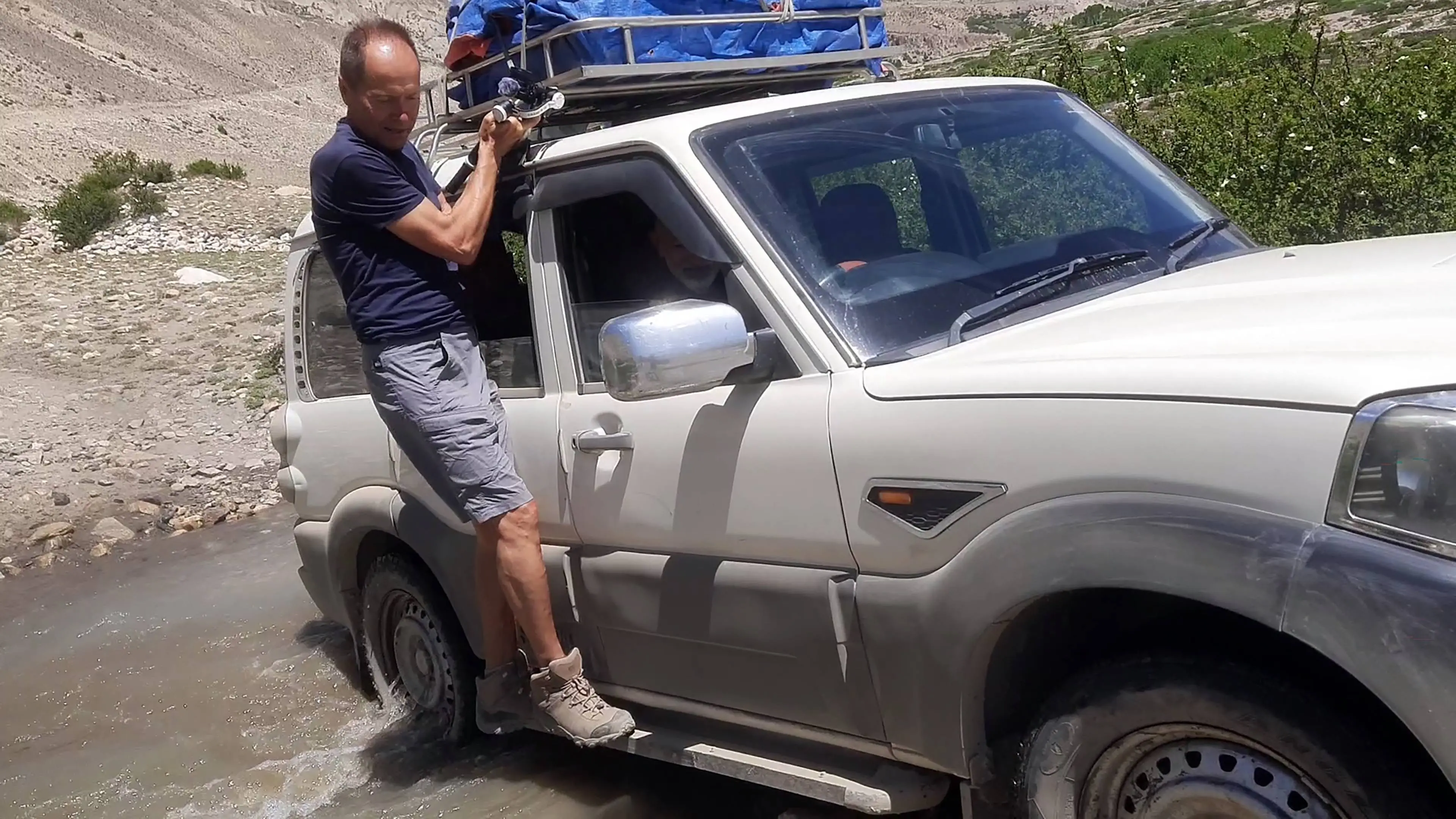
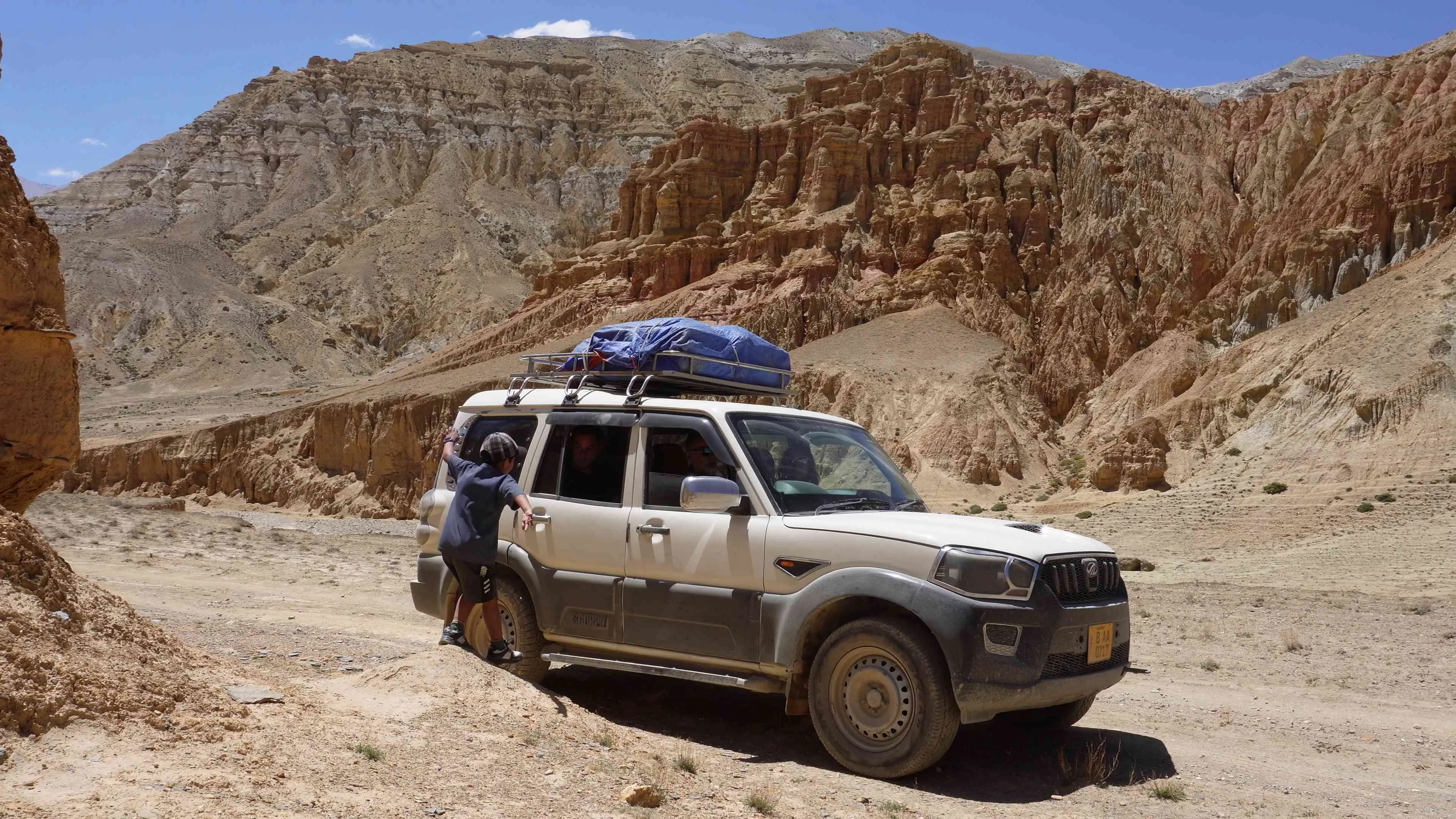
We will use this jeep for the remainder of this trip until we return to Pokhara. Following the natural direction of the Kali Gandaki River, we will pass through lush forests and beautiful terrace farmlands. The road can get rocky and bumpy as we travel from Beni to Tatopani. Overnight stay at a hotel in Tatopani, renowned for its natural hot springs. The area is ideal for resting, relaxing, and rejuvenating our energy while enjoying the healing hot springs.
We will pass the Tourist Check Post in Ghasa and stop at Marpha Village, which has a charming monastery. Marpha is famous for apple orchards and its delicious apple pies, cider, and apple brandy production. From here, we will continue to Jomsom, the headquarters of Mustang District, which also has a small Airstrip. We might also visit Dhumba Taal (2830m), the emerald-green lake 5.5 km west of Jomsom. This Lake is very famous for being a sacred Buddhist Lake. Our destination for today is Kagbeni, where we will stay overnight.
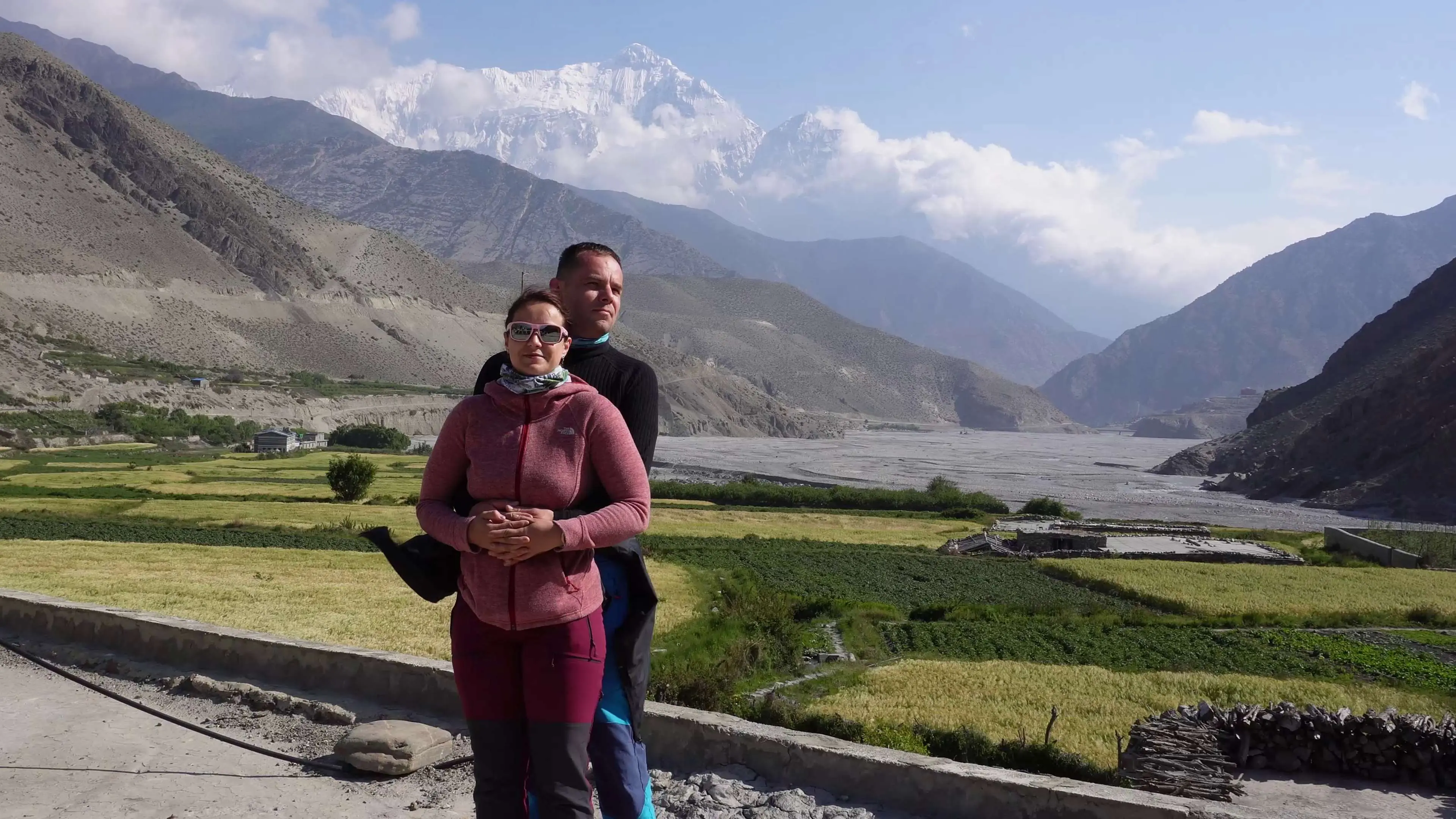
The local name of Kagbeni is ‘Ghaak,’ meaning narrow junction. This is where four (4) routes converge, allowing ancient kings to oversee and tax all the salt trade traffic from Dolpa, Tibet, Manang, and India. Kagbeni also offers spectacular views of Mount Nilgiri (7041m), Tilicho Peak (7134m), Yak Kawa (6482m), and Thorong Peak (6144m). You can also visit Kag Chode, a well-preserved 600-year-old Buddhist monastery in Kagbeni. They can explain a lot about Tibetan Buddhism if you're interested.
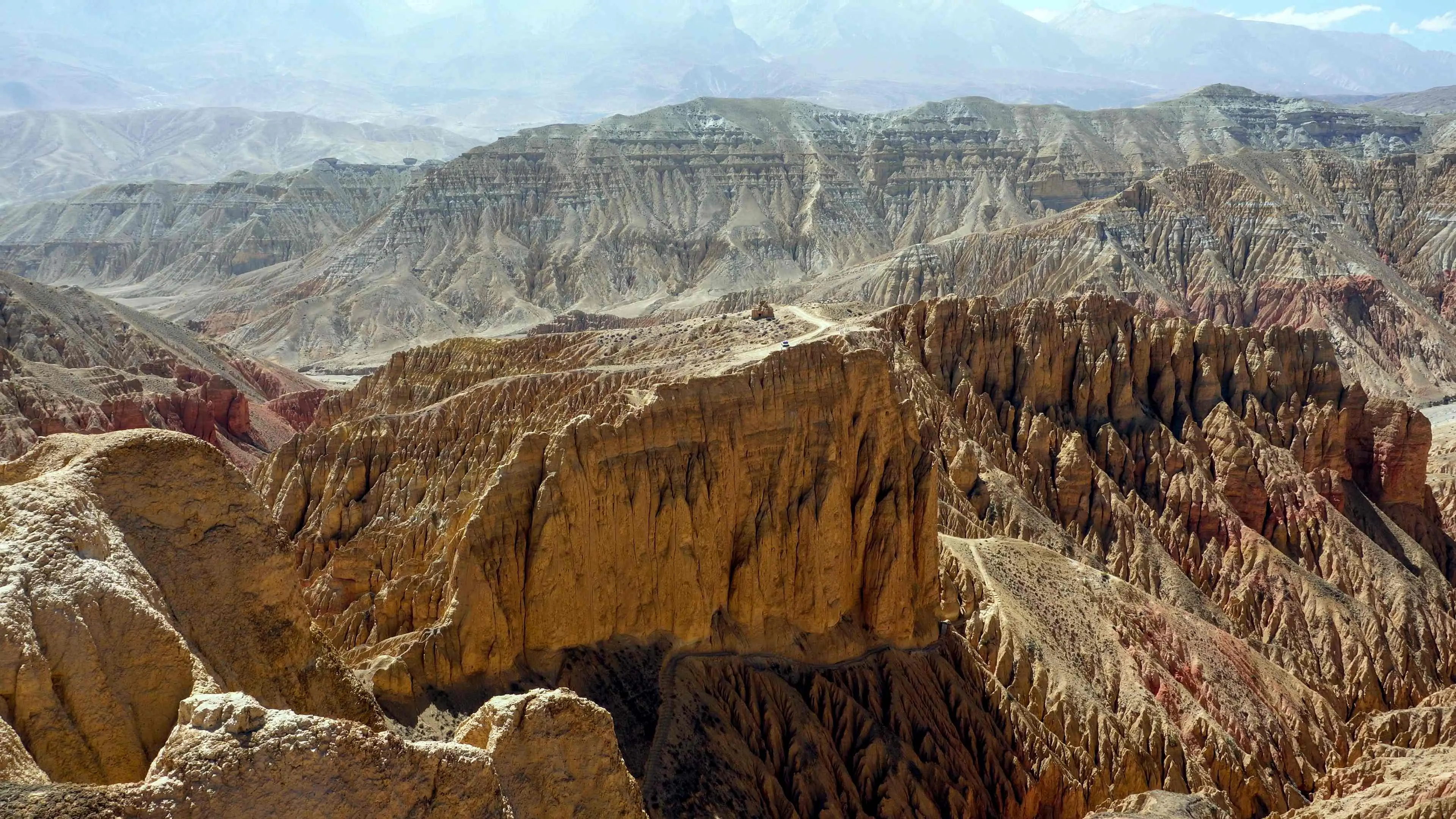
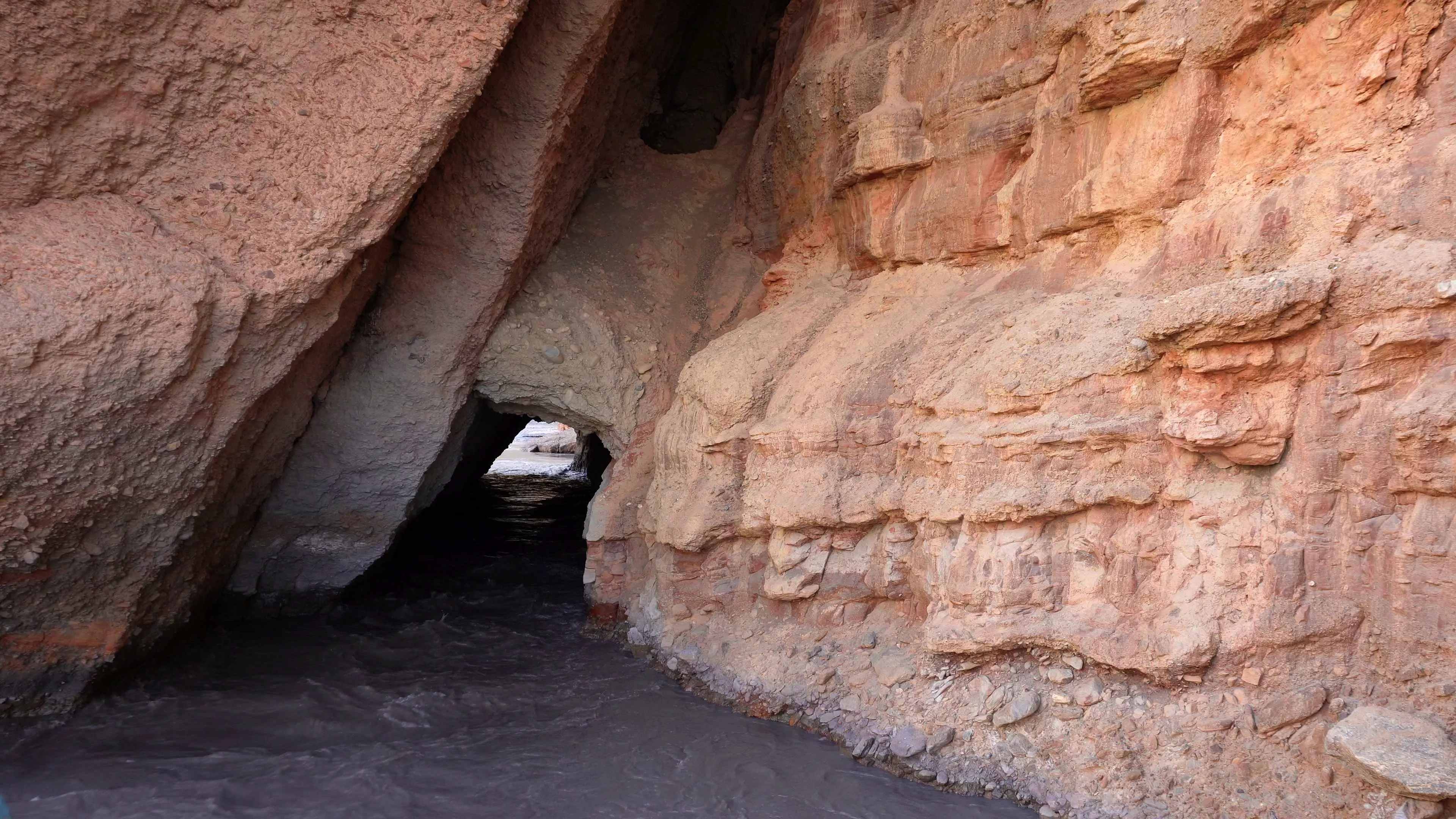
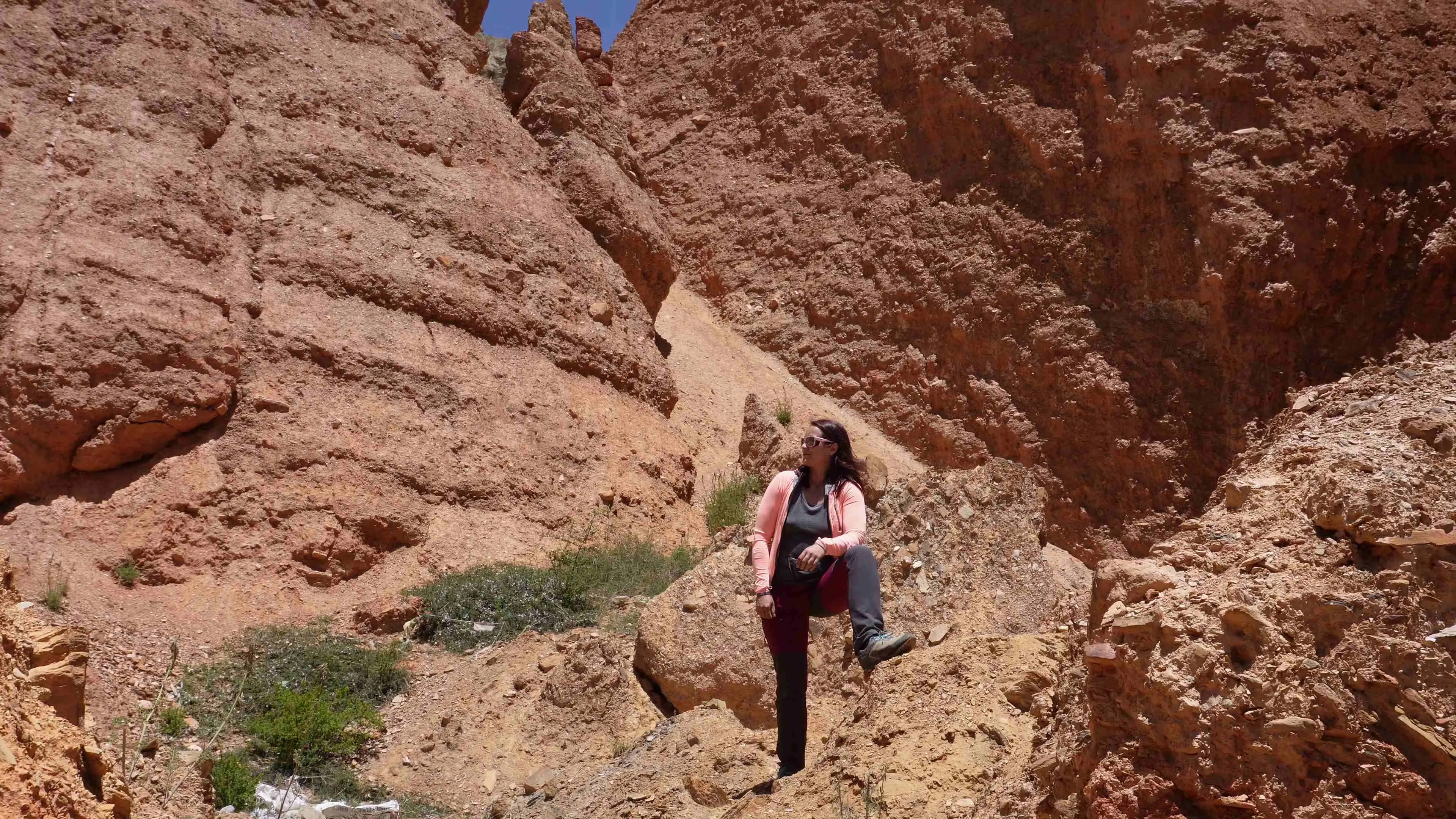
After the official formalities of the Special Permit for the Upper Mustang at the Area Police Office in Chhusang, we drive toward Kali Gandaki Bridge, where we will stop and walk to explore amazing red rock formations with many caves. From the caves, we will walk a short distance toward Chele Village to enjoy a spectacular view of the deep canyons of the Kali Gandaki River below. Our Jeep will pick us up here, and we will drive to Samar Village (3650m).
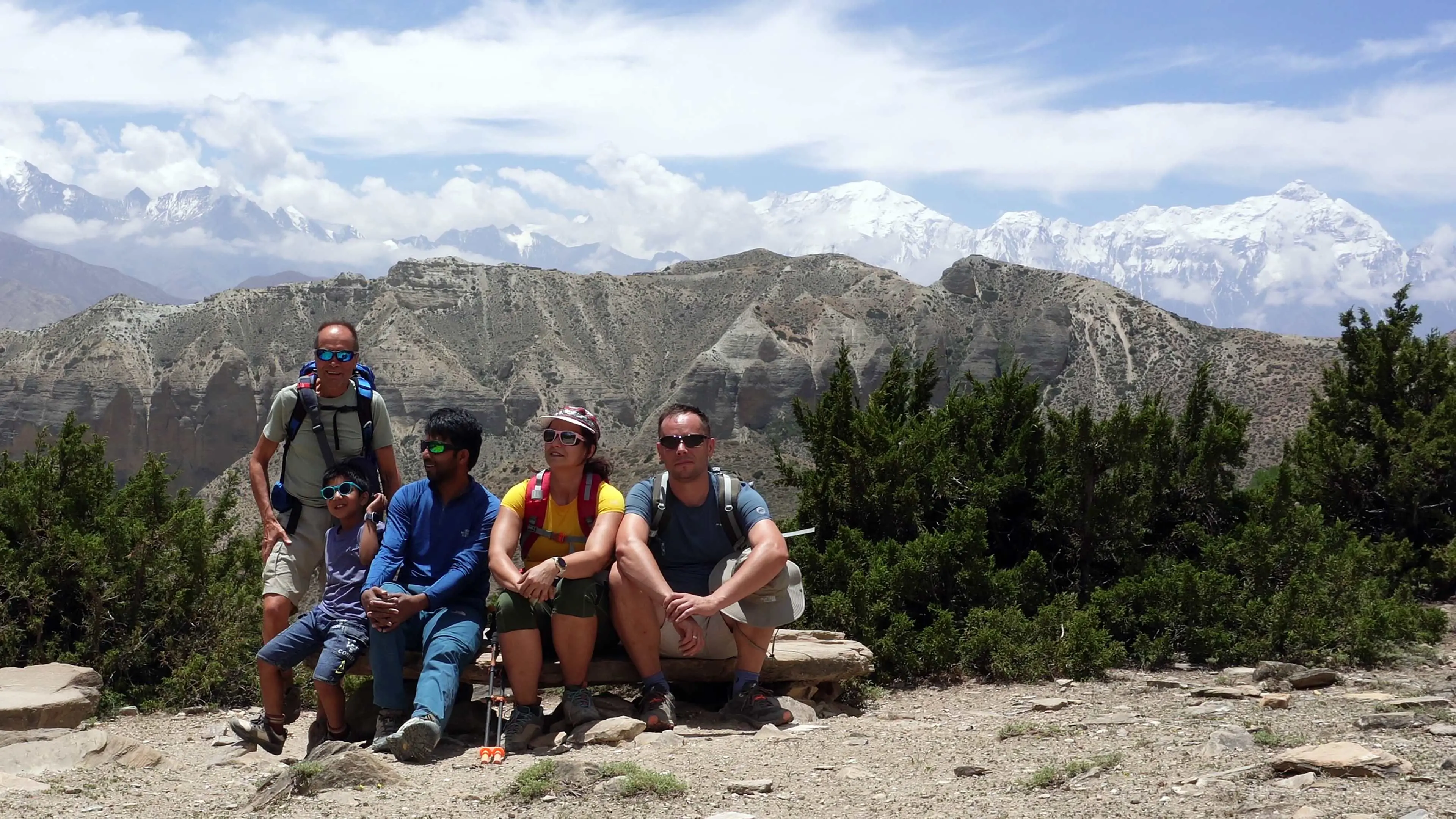
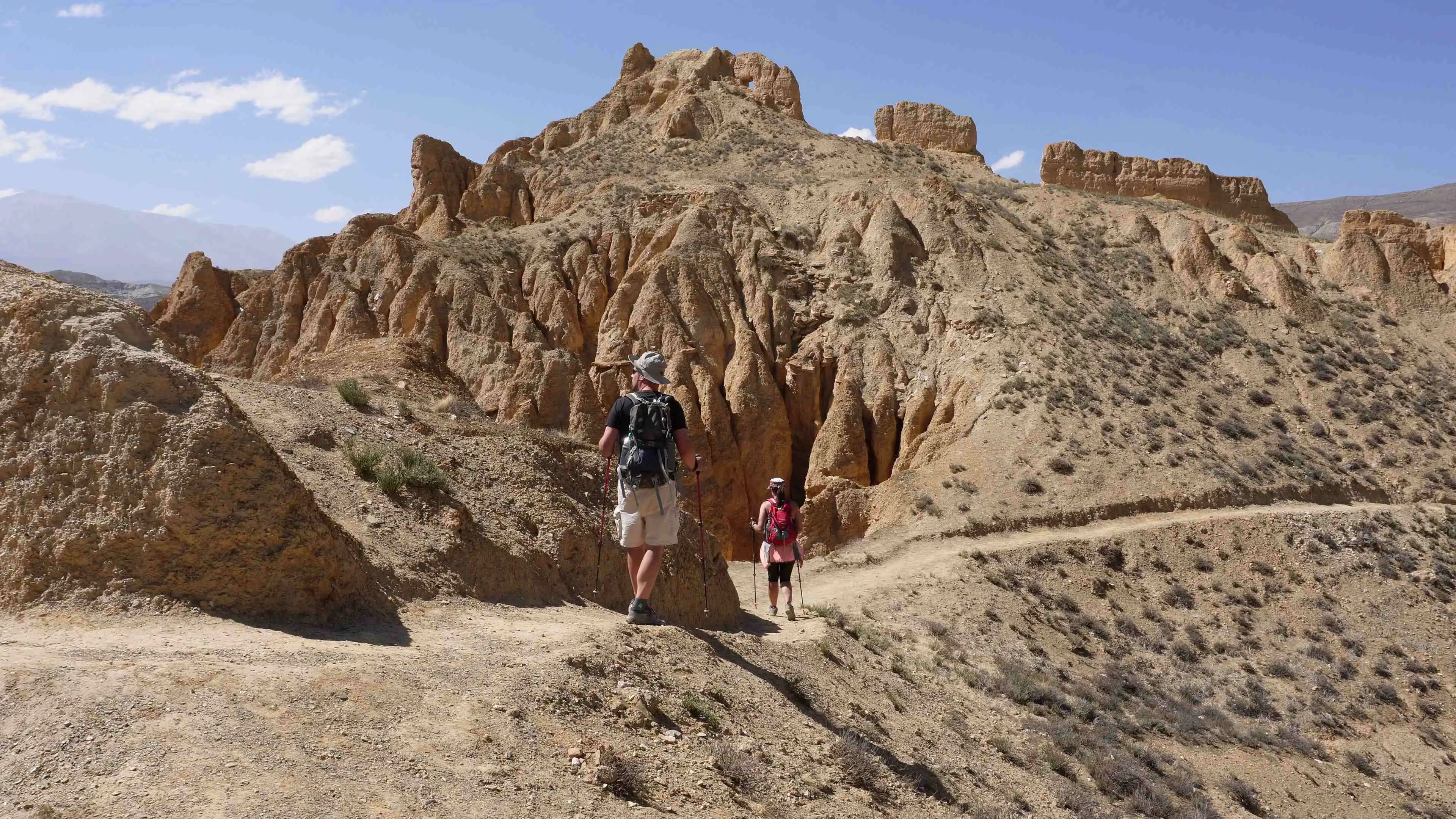
From Samar, we begin our trek toward Syangbochen. However, this trekking part is optional; if you prefer, you may stay in the jeep and meet us on the other side. This 10 km trail, which takes 3-4 hours to complete, crosses an unnamed 4000 m Pass. This high Pass has a spectacular view of Nilgiri (7061m) and Tilicho Peak (7134m). We will also visit Chungshi Rangjung Cave (3500m), believed to have been the meditation retreat of the renowned Tibetan saint Guru Rinpoche, credited with introducing Buddhism to Tibet. Chungshi Cave is one of Mustang's most popular Buddhist pilgrimage sites today. Our jeep will pick us up outside Syangboche, where we can have lunch, depending on the time, before driving to Bhina and Ghiling Village, where we will stay overnight.
A brief stop on the ridge above Ghami provides stunning views of the village below and another ridge marking the Nepal-China border. From here, we will drive down to explore Ghami Village. Life in desert areas is challenging and centers almost exclusively around water sources. Ghami is an excellent example of a settlement surrounded by lush green vegetation in the heart of Mustang's high-altitude desert. The jeep will pick us up on the other side of the village. On the way to Dhakmar, we will pass the longest Buddhist prayer wall and Chorten de Dhakmar. We should arrive in Dhakmar for lunch and spend the night in one of the two hotels here.
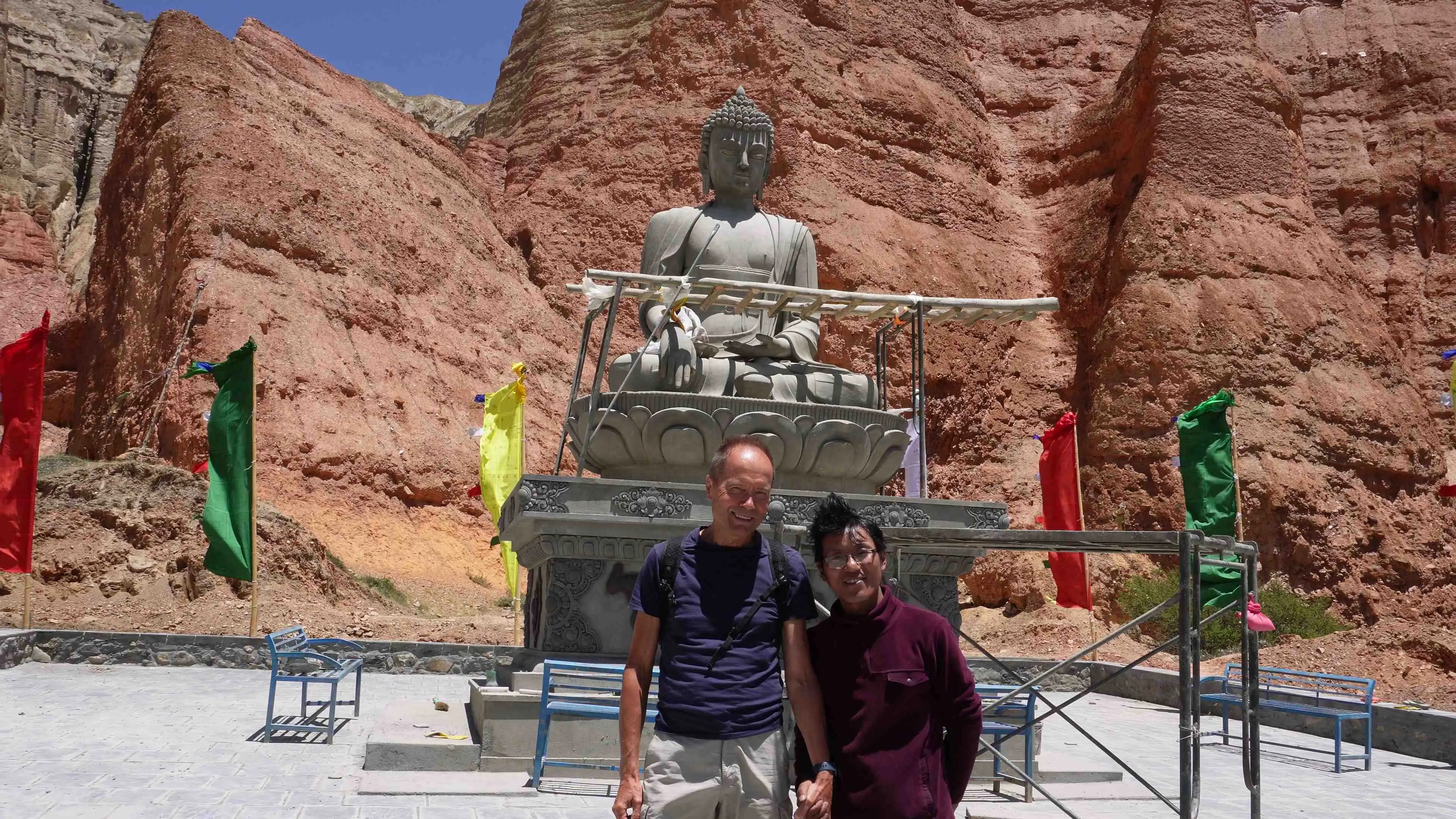
In the afternoon, we will explore the surrounding areas. As little as Dhakmar is, it has a lot to offer. The most spectacular are the red cliffs and caves of Dhakmar, which were formed naturally. However, legend has it that these red cliffs result from the blood of a demon slayed nearby by the Buddhist monk Guru Padma Sambhawa. We can also visit the park with a newly constructed Buddha Statue (in 2024) and see the only two yaks grazing at these low altitudes.
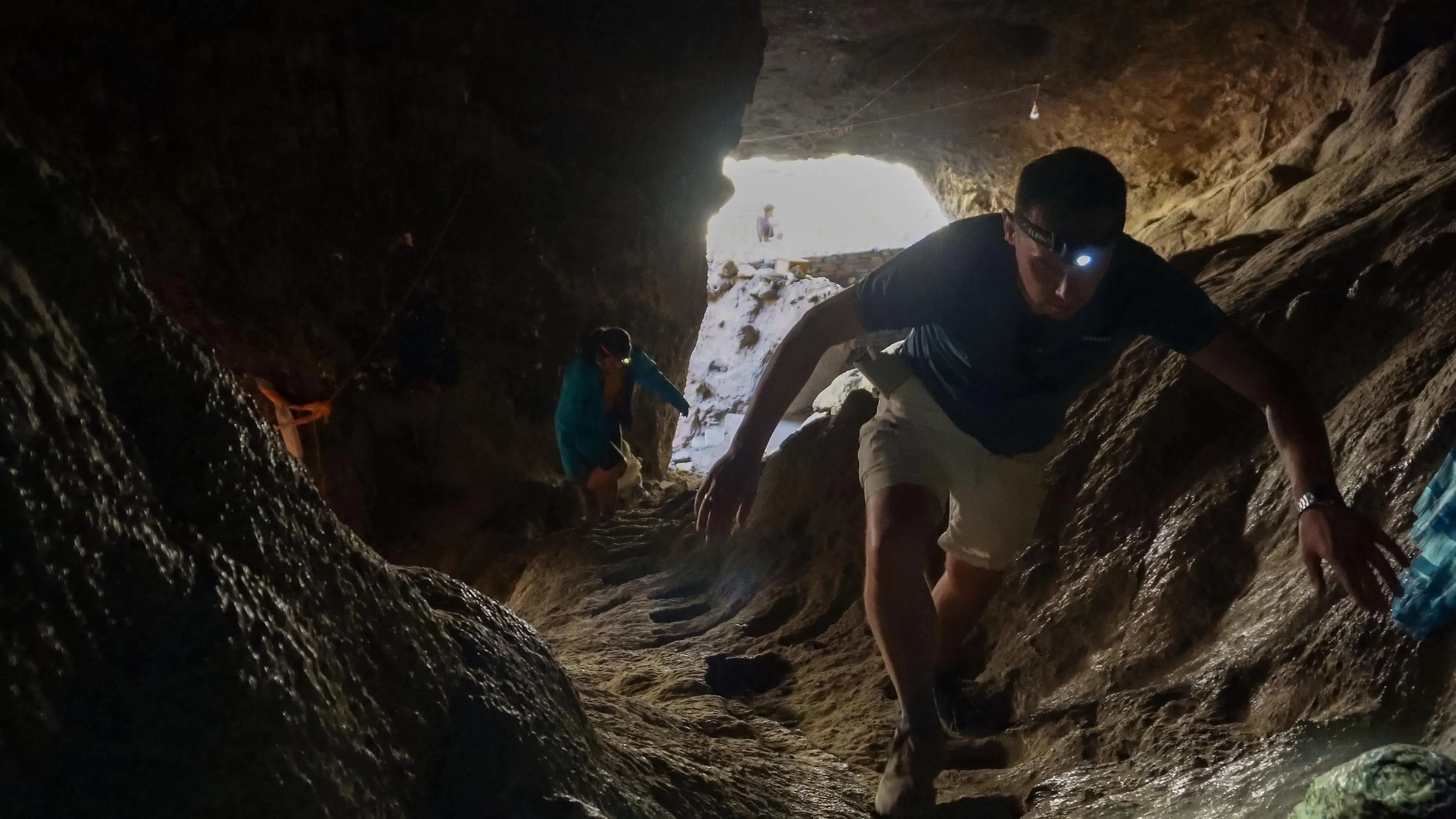
On the other side of Dhakmar village are several accessible Sky Caves, a collection of some 10,000 throughout Nepal. These are primarily artificial caves dug into the valley walls.
Drive from Dhakmar (3810m) via Mui La Pass to Lo Ghekar Monastery (Ghar Gonpa) (one of the oldest Buddhist monasteries in the world, which was built in the 8th century) and then to Lo Manthang (3840m). This 30 km bumpy, off-road, dusty route takes approximately 3 to 4 hours. After visiting Ghar Gonpa, we ascend over another pass, Lo La Pass (3950m), where you can enjoy delightful views of the valley below, including Lo Manthang. Lo La Pass is a crucial point on the trek to the ‘Walled City’ of Lo Manthang, the former capital of the Kingdom of Lo. Did I mention that it is incredibly windy here on the Pass, with hurricane-force winds creating localized storms? Please prepare yourself with proper face and head coverings and wraparound-style eyeglasses.
We will spend the afternoon sightseeing in Lo Manthang, the Walled Capital of the Kingdom of Lo since its founding in 1380 by Ame Pal. The village is best known for its tall, whitewashed mud-brick walls, gompas, royal palace, and, of course, the 6-meter-high earthen wall with square towers, a feature that distinguishes it and protects the compact settlement of earthen structures. Overnight in a hotel in Lo Manthang.
From Chhoser, we will drive to Ghom, Dhuk, and Bharcha to pick up a trail to Konchokling Cave, then return to Lo Manthang for an overnight stay. This 48 km round trip along a bumpy, off-road, dusty route takes approximately 3 to 4 hours.
Upper Mustang is known for the thousands of sky caves in the mountains. In pre-historic times, people lived in these caves and used them as storage rooms, places to hide from enemies, burial sites, and places of worship. Most of these caves are more than a thousand years old. In Chhoser, we will walk for 1.5 to 2 km to see one of the jewels of this area, Jhong Cave, the most mysterious, 5-story-high Sky Cave built into a cliff. The entrance to the cave is narrow, but there are more than 40 rooms and numerous ladders leading to another floor. It remains unclear why the sky caves were built. In the early 1000s BC, caves were used as burial chambers. Archaeologists have explored these stacked caves and found partially mummified human bodies and skeletons at least 2000–3000 years old. During the 10th century, frequent wars forced the villagers to hide in caves to escape brutality. In the 1400s, the caves were utilized for spiritual meditation, storing goods, and serving as military lookouts.
Later, we will visit Nyiphug Namdrol Norbuling Sun Cave Monastery, established in the 14th century. Explorations of these caves have also led to the discovery of valuable Buddhist paintings, sculptures, manuscripts, and numerous artifacts from the 12th to 14th centuries.
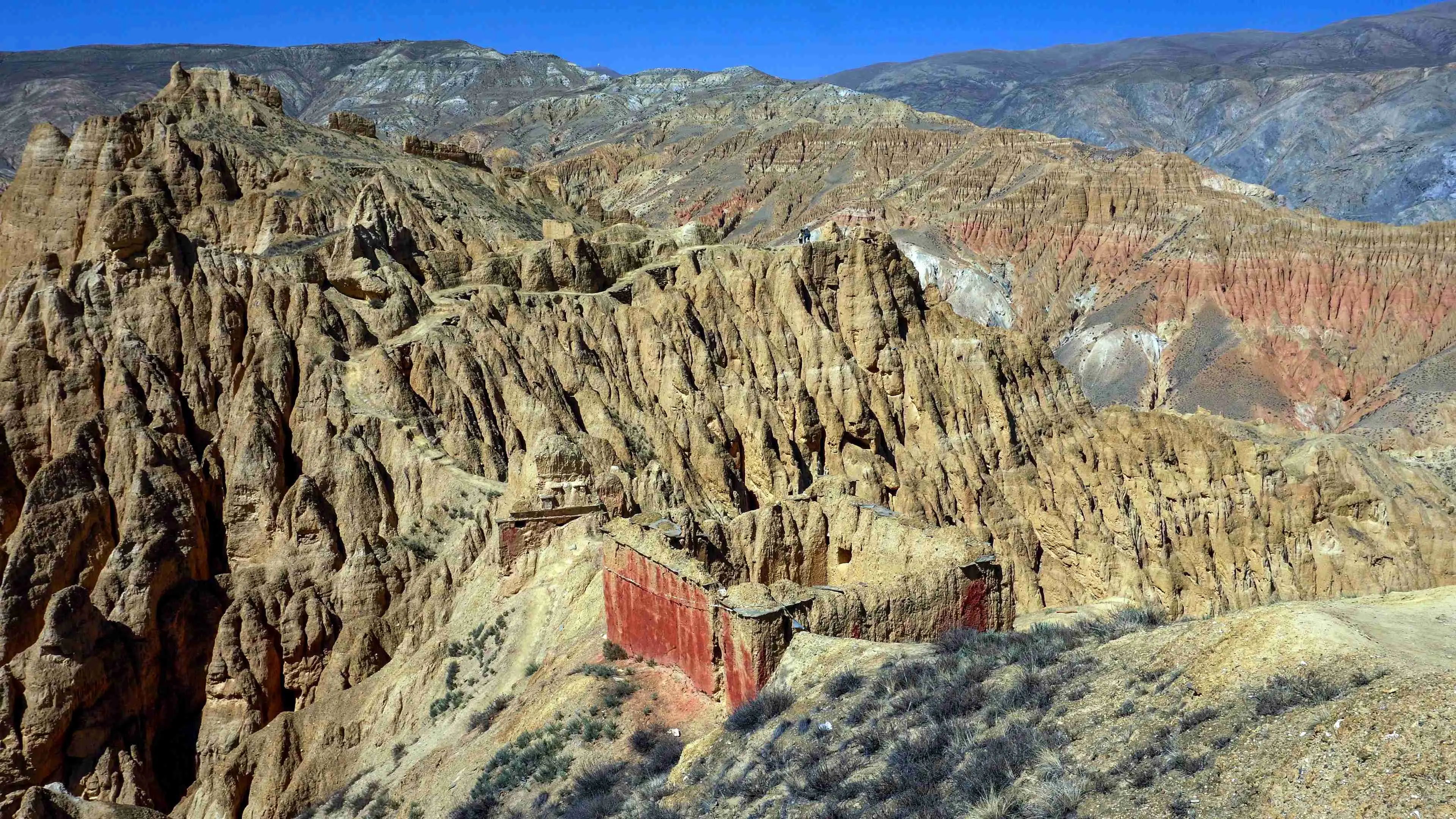
After lunch in Garphu village, we will drive past Bharcha, where we will pick up a hiking trail to Konchok Ling Cave, famous for its stunning murals believed to be from the 13th or 14th century. As before, this is an optional trekking activity that will take about 2 to 2.5 hours, but if you prefer, you may stay in the jeep and meet us after our return. However, I believe this is the most beautiful area in Upper Mustang and worth the extra effort. The cave is reached by a narrow, steep trail that winds up the multi-shade orange-red cliff face, shaped into fascinating forms by centuries of erosion. The highest point on that trail is 4100 meters, with an amazing 360-degree view.
This 40 km bumpy, off-road, dusty route takes approximately 4 to 5 hours. Overnight in a guesthouse in Yara.
Tsarang Village is renowned for its traditional mud-brick houses, narrow alleys, and impressive fortress-like structure, Tsarang Dzong, also called Red Gompa. The 14th-century Gompa is one of the oldest and largest monasteries in the Mustang region. Nearby are the ruins of the 16th-century palace, which was once the home of King Raja of Mustang. On display are the blackened hand said to belong to the palace's Master Builder and an authentic 800-year-old king’s helmet, among other artifacts.
After reaching Yara, we will visit Cave Nunnery Luri, Luri Gompa, and Tashi Kabum Cave Gompa. It takes about one hour to reach Tashi Kabum from Yara village. We can also look for Saligram (fossils) along the Kali Gandaki Riverbed. Astonishingly, they are found here at 3700 m above sea level; this is because, before the Himalayas were formed, Mustang was the seabed of the Tethys Ocean.
This 95 km partially off-road and partially paved route takes approximately 5 to 6 hours. Overnight in a guesthouse in Muktinath. Muktinath is home to the Mukti Kshetra temple, meaning ‘the place of liberation’ or ‘the place of salvation,’ but it is commonly called Muktinath Temple. The temple is a small, whitewashed structure with a golden roof and prayer flags. It is dedicated to Lord Vishnu and is surrounded by 108 waterspouts, which are believed to possess healing powers.
Situated at 3760 meters, Muktinath is considered a place of nirvana or salvation (Moksha) and is home to the Muktinath Temple, a statue of Buddha, and several monasteries. This region holds great spiritual significance for both Hinduism and Buddhism. Millions of pilgrims undertake the journey to visit and receive blessings from the deity each year.
After visiting the Temple, we will drive from Muktinath to Tatopani (1200m) via Jomsom (2739m). The drive covers approximately 113 km and takes about 6 to 7 hours. We will stay overnight at a hotel in Tatopani again, renowned for its natural hot springs. The area is ideal for resting, relaxing, and rejuvenating our energy while enjoying the healing hot springs. If pressed for time, we could drive an additional 3 hours directly to Pokhara, making a very long 10-hour driving day.
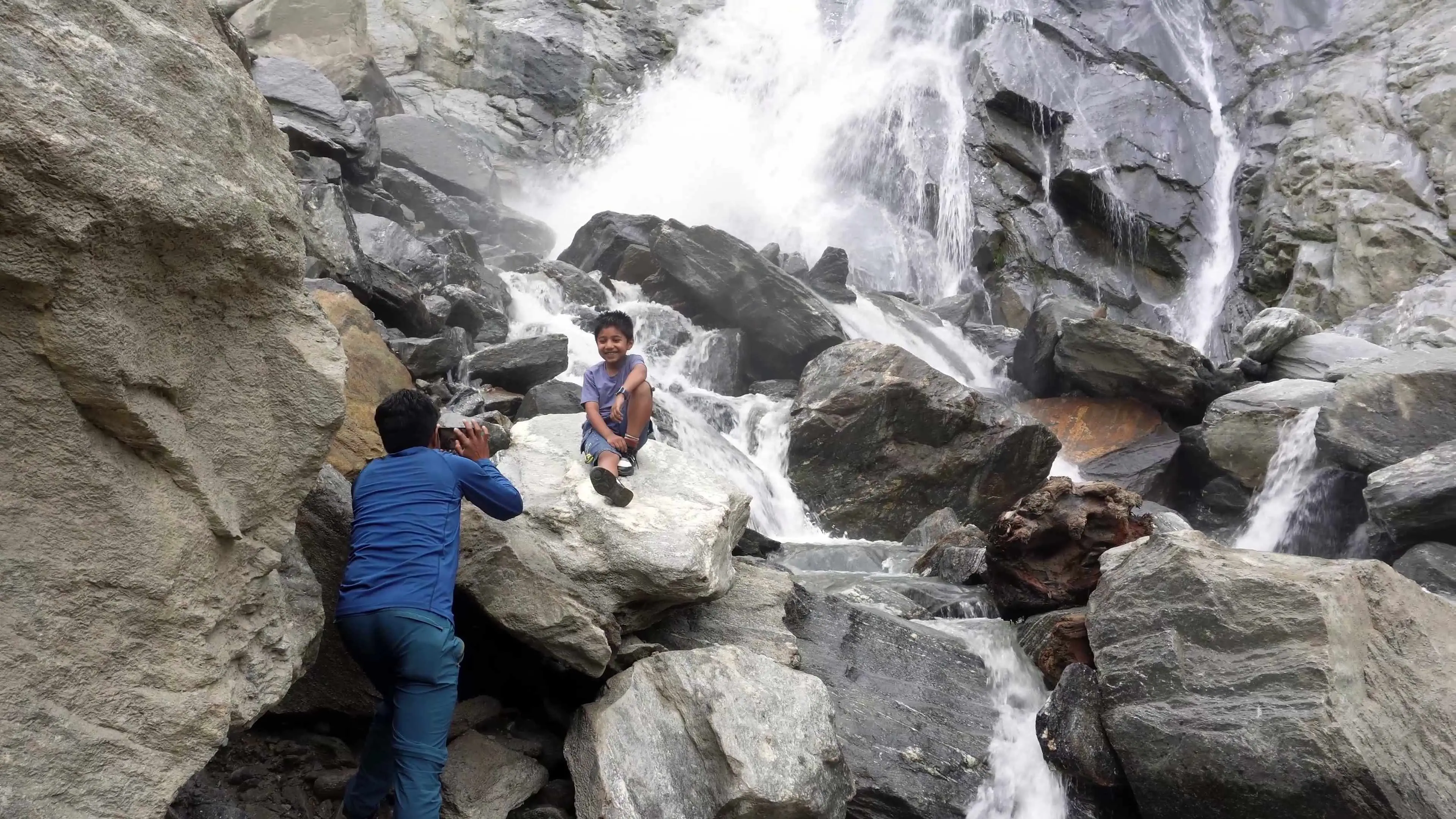
The bus ride from Tatopani to Pokhara (915 m) via Nayapul is approximately 61 km long and takes 2 to 3 hours. Upon arriving in Pokhara, you will have several activity options: take a sightseeing tour of the Pokhara Valley, visit Davis Falls, enjoy boating on Phewa Lake, or hike up to the World Peace Stupa. Overnight at a hotel in Pokhara.
If you do not want to fly, we can arrange different transportation to Pokhara: a tourist bus or a private vehicle. The drive by private vehicle will take approximately 5-6 hours, and the bus will take 8-10 hours. Overnight at a hotel in Kathmandu.
If you are not interested, it can be removed from the itinerary and those shortening that program by one day. After breakfast, join our tour guide to explore Kathmandu Valley’s cultural and historical UNESCO World Heritage sites. We’ll begin at Boudhanath, home to the impressive Boudhanath Stupa, one of the largest Buddhist shrines in the world, where you can witness Buddhist monks in prayer. Next, we’ll visit Pashupatinath, Nepal’s most revered Hindu temple, along the sacred Bagmati River. At this site, you will see Hindu holy men (sadhus) meditating, pilgrims bathing in the river, and occasionally, funeral pyres burning on the ghats, highlighting the blend of spirituality and tradition. Our journey continues to Kathmandu Durbar Square, where you’ll marvel at the temple of Goddess Kumari and learn about the captivating legends of the valley. If there is a will and enough time, we could also visit Monkey Temple (Swayambhunath). In the evening, we will have a farewell dinner at a Nepalese restaurant. Then, you will spend the night at a hotel in Kathmandu.
Our airport representative will drop you off at Kathmandu International Airport for your outward journey.
Where does the money you pay to the agency go? Almost all of it goes "back to the mountain," so to speak. Only a tiny fraction of that money is spent on office expenses.
Transportation:
Trekking Permits:
Lodging Accommodations:
Food and drinks:
Cost for Guides and Porters:
Miscellaneous Costs.
Trekking Gear Cost:
Internet Wi-Fi and device charging Costs:
Tips and Donations:
Souvenirs and Gifts:
Nepal Tourist Visa fee and travel insurance:
 >
> >
>