Trip Info
Cost of packages for the Annapurna Region.
The cost of trekking packages in the Annapurna Region varies based on several factors, including trek duration, the number of trekkers, whether the trip is private or on a group basis, the season, type of accommodation, and mode of transportation. Treks can start in either Kathmandu or Pokhara. Some companies have recognized the demand for a shorter, more efficient route, offering five-day Annapurna Base Camp (ABC) treks from Pokhara. These strenuous and challenging treks are designed for fit and active trekkers looking for budget-friendly options, with prices typically around 1200 USD or less. In contrast, the standard ABC trek usually takes 8 to 12 days, depending on the chosen route and starting point, the season, and other factors. Prices for these treks generally range from 1350 to 2300 USD per person.
TMT specializes in all-inclusive trekking packages from Kathmandu, some with heritage sightseeing tours. Depending on accommodation, these packages can be budget or luxury, and we can also provide individually tailored packages to match your interests and preferences. Don't hesitate to contact the TMT team for a personalized quote based on your itinerary and preferred options.
For example, the 11-12 days Annapurna Base Camp (ABC) budget all-inclusive Package 1, offered by TMT, is around 1950 USD per person (based on a single person) during the peak seasons, but the Luxury package could be 2-3 times as much, depending on the level of comfort and services you require. Also, the larger your group, the lower the per-person cost, as some costs could be shared, like transportation by private vehicle or accommodation.
The cost of these all-inclusive packages typically includes transportation from and to the international airport, transportation to and from the starting and ending points of the trek (including domestic flights to or from Pokhara when applicable), accommodation at the hotels in Kathmandu and Pokhara, and in local lodges or guesthouses, meals, and the services of a licensed trekking guide and porter. We also include the cost of permits, Annapurna Conservation Permit Fee (ACAP), Trekking Permit (TIMS), and all the applicable local taxes. Please refer to the Included/Excluded Services and Items section for details.
Using an agency like TMT offers numerous benefits that make your trip much more comfortable. When you book a trekking package with us, you won't have to worry about where to go, how to get there, or finding a place to stay overnight, especially during peak seasons. Traveling with a licensed local guide is also significantly safer. Do you have experience with high-altitude trekking? Are you familiar with how to recognize the signs of high-altitude sickness and how to manage it? By choosing TMT, the trek becomes a shared responsibility between you and the agency.
Where does the money you pay to the agency go? Almost all of it goes "back to the mountain," so to speak. Only a tiny fraction of that money is spent on office expenses.
Transportation:
- Transportation costs from and to the international airport.
- Transportation costs to and from Pokhara are another significant cost. For example, a one-way flight is 115 -120 USD (for foreigners), a Luxury Tourist Bus is 30 USD, but the least expensive is a Tourist Bus at 10 USD, and a Private Car is 110 USD. Alternatively, you can hire an SUV for Pokhara, which costs between 80 and 130 USD.
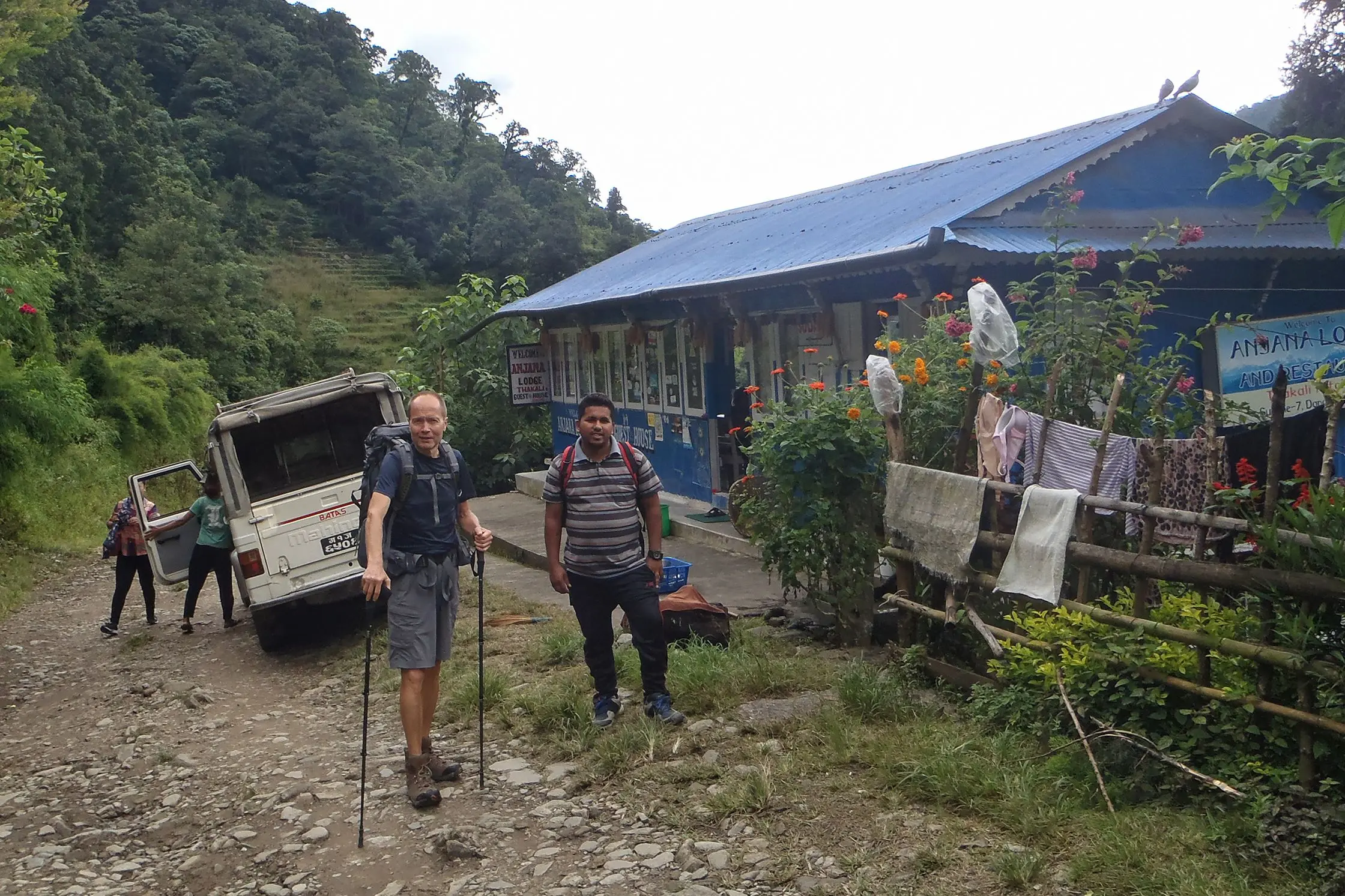
- For some packages, we must use a high-clearance all-terrain “jeep” that costs 125 to 150 USD.
- We could also use a one-way helicopter charter flight from 1500 USD to 2000 USD if you like, but that would be an extra cost to you.
Trekking Permits:
- Trekking Permit Fee (TIMS or Trekkers Information Management System) and Annapurna Conservation Permit Fee (ACAP).
Lodging Accommodations:
- Hotel accommodations in Kathmandu and Pokhara upon arrival and departure.
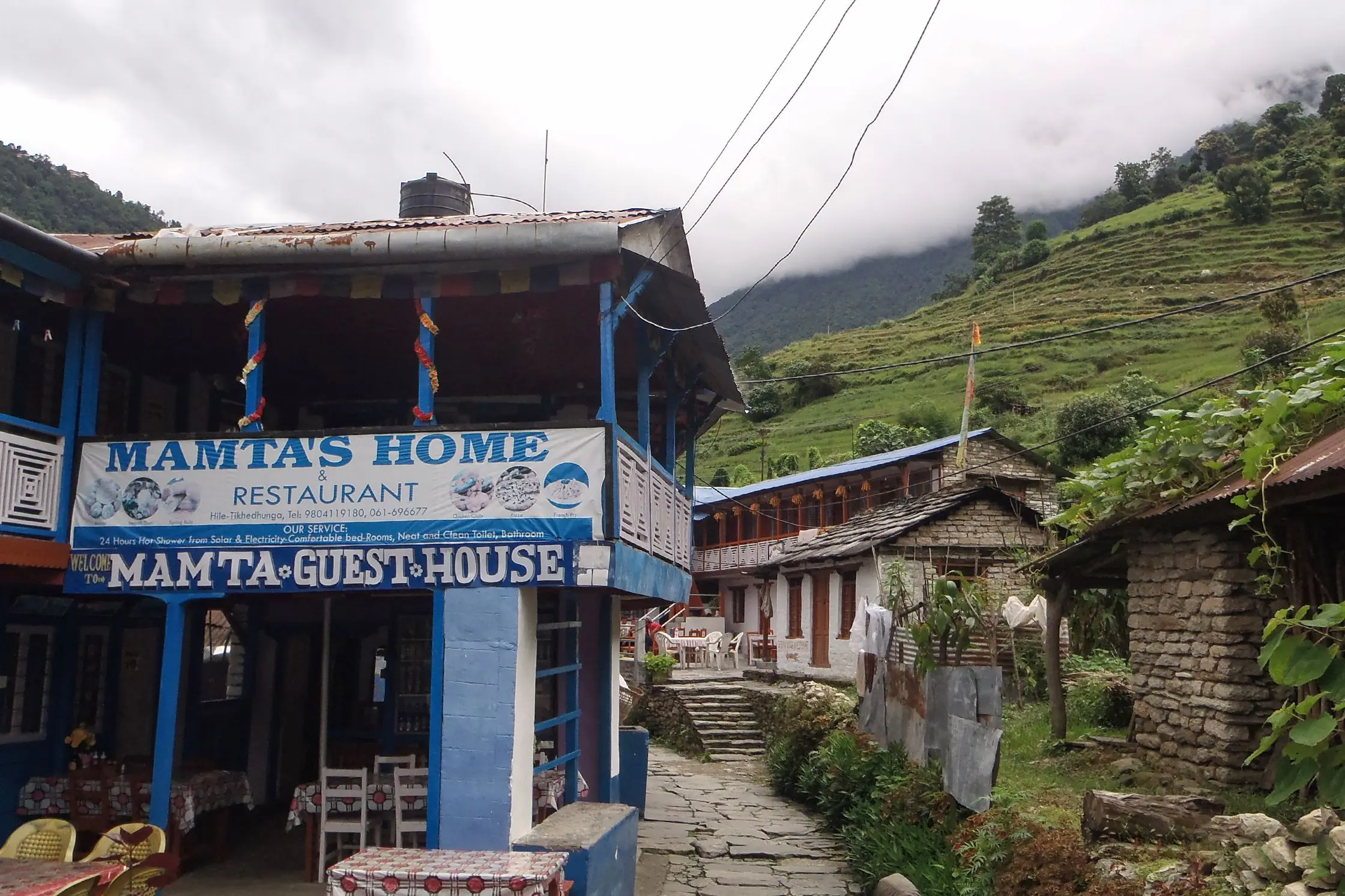
- Accommodation costs during trekking at tea houses and guesthouses; however, the quality, service, and amenities vary. The tea houses have twin-shared bedrooms, communal dining rooms, and shared or private bathrooms. Some teahouses offer attached bathrooms, but do not expect it everywhere. You get essential bed items like pillows and blankets, so carrying a sleeping bag is wise for trekking at high altitudes. During peak season, trekkers might need to spend the night in the dining hall at high-altitude locations. If this happens to you, don't feel discouraged; the dining area is reliable in terms of warmth and safety. We will try to get the best possible accommodation during your trek.
Food and drinks:
- Some packages include a farewell dinner one day before departure in Kathmandu.
- Cost of food, non-alcoholic drinks, coffee, hot chocolate, hot water, or tea during the trek. Food menus at the lodges may include local delicacies and Western-style cuisine. However, don’t expect lavish provisions of food and lodging in high-altitude places. We recommend trying the local dish known as Dal Bhat. It is often referred to as trekking food in Nepal. A famous saying is, “Dal Bhat Power, 24 Hour.”
- Drinkable water is available on the trek. You can drink directly from the water taps, which the locals use. You can use medication to purify the water if you are unsure, or there are water refilling stations along the route. Those stations serve boiled, drinkable water and charge you around 25 to 100 Nepalese Rupees (NPR). Alternatively, you can purchase bottles of mineral water, priced between 25 and 300 NPR, depending on our current altitude.
Cost for Guides and Porters:
- Do you need to hire a trekking guide to trek in Nepal? In the past, the answer would have been "NO," except in a few restricted areas. However, things have changed. As of April 1, 2023, the Nepal Tourism Board has implemented a new rule requiring foreign trekkers to hire a trekking guide to trek in any Himalayan region of Nepal.
- The rule was long-awaited, as many independent trekkers go missing in the mountains every year, particularly during heavy snowfall. Therefore, hiring a trekking guide is now mandatory for trekking in Nepal, while hiring a porter remains optional.
- TMT utilizes licensed, experienced, English-speaking trekking guides certified by the Government of Nepal, Ministry of Culture and Tourism, and qualified to guide trekkers in any destination throughout the Nepalese Himalayas. If needed, we can also provide guides who speak other languages. The cost of a Guide—30 to 35 USD per day—covers their insurance, food, accommodation, and the guide’s salary.
- A trekking guide is a person who leads trekkers along a trail, offering navigation and valuable information about the mountains, scenery, flora, fauna, and local culture. In Nepal, a trekking guide serves as a trek leader, a manager who arranges accommodation in advance, and an organizer who adjusts the itinerary according to your hiking pace. Additionally, they assist with communication by translating between Nepali and English, and they can help in case of emergencies, such as if a trekker becomes ill in the high Himalayas.
- A trekking potter is a supporting character in trekking adventures. These physically fit men come from mountainous regions and are responsible for carrying your trekking gear. They usually do not speak fluent English and walk at their own pace. Therefore, it is essential to have a daypack with all the items you need for daily hikes. Each potter is typically paired with (2) two trekkers and carries a total weight of 20 to 25 kg, depending on their strength. Hiring a porter is still your choice. We will provide one if you feel your bag is too heavy and want to make walking more manageable on the steep trails. However, if you prefer not to have a porter, that's completely fine, and we will deduct that cost from the package price. The cost of hiring a porter is US$25 to 30 per day, which covers insurance, food & accommodation, and the porter’s pay.
- Regardless of their job, these are humble, friendly, and hard-working people earning a living in their local communities to support their families and themselves. You might make a few new friends when you finish your trek in Nepal.
Miscellaneous Costs.
- These costs are usually your responsibility. Please refer to the Included/Excluded Services and Items section for details. We list additional fees to help you plan your trip's total expenses. You may enjoy various lavish amenities at no extra charge at a low altitude. For instance, Wi-Fi can be free, and you may have access to hot showers in the rooms connected to the bathrooms. However, as you ascend to higher altitudes, you might need to pay extra for some of these services. Hot showers, shops, internet access, and mobile coverage often incur additional costs. Be sure to consult with your trekking guide to find the best deals available.
Trekking Gear Cost:
- You might not have all the trekking essentials for a Trek. In such a case, you could either buy or rent. You can buy trekking gear in Nepal as well. However, we suggest you hire trekking gear and other things; buying everything is unnecessary. In Nepal, you can easily rent equipment like down jackets, sleeping bags, backpacks, trekking poles, etc. The rental cost of this gear begins at 1 USD per day.
Internet Wi-Fi and device charging Costs:
- The Internet is necessary for many of us; thankfully, Wi-Fi service is available at some teahouses, but it is often slow and may have a charge. The regular fee for Wi-Fi per day is around 5 USD. Consider purchasing a local SIM card for connectivity. Wi-Fi service at hotels in large cities is usually free of charge.
- Solar energy and generators are frequent sources of electricity, and there may be costs associated with charging devices. Charging stations are typically available in teahouses and lodges, with fees ranging from 2 to 5 USD. In larger cities, hotels often provide device charging services free of charge.
Tips and Donations:
- When trekking in Nepal, it's customary to tip your crew after the adventure. While tipping is not mandatory, it is expected. You may also consider donating money to assist other people or groups in need. Ultimately, the decision to tip or donate is up to you, so having extra cash on hand is a good idea for tips and a well-deserved beer at the end of your trek.
- Not all cultures have a tipping custom, but in Nepal, tips are appreciated to express gratitude. Trekking crews work diligently to take care of you and your belongings. As a guideline, we recommend tipping lead guides at approximately 20 USD per day, assistant guides (in larger groups) at 15 USD per day, and porters at 10 USD per day.
- While these guidelines provide a good foundation, you shouldn't feel obligated to adhere to them rigidly. While rewarding your guide and porter for their excellent service and hard work, it's essential to consider your individual experience during the trek.
- When should you tip the trekking crew? You should give tips to your crew just before saying goodbye. Typically, you would provide tips to your porters and assistant guides first, as the lead guide often accompanies you longer, even during the journey back to Kathmandu by car or plane.
- Do you need to tip in cash? Nepal operates primarily on a cash economy, so tips should be given in cash. You can tip in either Nepali Rupees (NPR) or US Dollars. Withdraw rupees from ATMs while in Kathmandu or Pokhara. Alternatively, you can exchange cash at a bank. Tipping porters in your group with Nepali Rupees (NPR) is advisable, as they may not have good opportunities to exchange foreign currencies.
Souvenirs and Gifts:
- The trip will take you through locations such as Kathmandu, Pokhara, and some remote areas. You may find items along the way that you would like to purchase for yourself or as gifts for friends. Therefore, it's essential to consider these potential additional costs when planning your trip budget.
Nepal Tourist Visa fee and travel insurance:
- The cost of a Nepali visa depends on the length of your stay and the number of entries. As of 12/22/2024, for a stay of 15 days, the cost is 30 USD; for a stay of 30 days, the cost is 50 USD; and for a stay of 90 days, the cost is 125 USD (check the official government website for updated prices). You can get a visa on arrival at Tribhuvan International Airport in Kathmandu or at other checkpoints in Nepal. We recommend you carry the exact amount in cash for your visa payment.
- However, within two weeks of your arrival in Nepal, please complete the Online Visa Application and carry a printed copy with you: https://nepaliport.immigration.gov.np/
- Use: Visa On-arrival
- Choose your entry point: Tribhuvan International Airport (TIA)
- Visa type: Tourist Visa
- You must also provide hotel information for your stay in Nepal, which we will furnish after you book your trip with TMT.
- Additionally, you must have personal Travel and Health Insurance, including coverage for emergency rescues and evacuations.
- The airfare for your international flights to and from Nepal is a significant expense for your trip. Please note that this cost is not included in our packages, and we do not arrange or sell international tickets. It is your responsibility to book these flights.
You may also be responsible for additional costs not listed here. Please refer to the Included/Excluded Services and Items section for details.

 >
> >
>