| Price per person | No of people |
|---|---|
| $1,450 - $2,000 | 1+ |
Price range 1450-2000 USD, please contact with us to get personal quotation.
Plan for an evening briefing on last minute details regarding your trek, followed by an early light out at the hotel, as you have a big day ahead.
Lukla is the gateway to the Everest region. In the morning, you will drive by private vehicle to Kathmandu Domestic Airport to take a flight to Lukla, which lasts approximately 40 minutes. During December, January, February, June, July, and August, you can fly directly from Kathmandu to Lukla.
However, during the peak trek seasons of March, April, May, October, and November, flights to Lukla may operate from Ramechhap/Manthali instead of Kathmandu due to increased traffic congestion. To catch a flight from Ramechhap, you must leave Kathmandu and head to Manthali around 12:30 a.m. on your scheduled departure date, as the drive takes approximately five (5) hours. The flight from Ramechhap to Lukla takes approximately 20 minutes.
We recommend adding an extra day at the start of your trip to avoid an early morning wake-up, especially after a long international flight during peak season. Arriving in Kathmandu one day earlier will allow you to relax. The following day, you can take a bus from Kathmandu to Ramechhap/Manthali, which takes about 5-6 hours, or opt for a private vehicle for a shorter travel time but at a higher cost. This option would require an overnight stay at a hotel in Manthali, adding one extra day to your itinerary.
To avoid the Kathmandu-Manthali-Lukla route, you can charter a helicopter from Kathmandu to Lukla for approximately 550 USD per person when shared among five passengers.
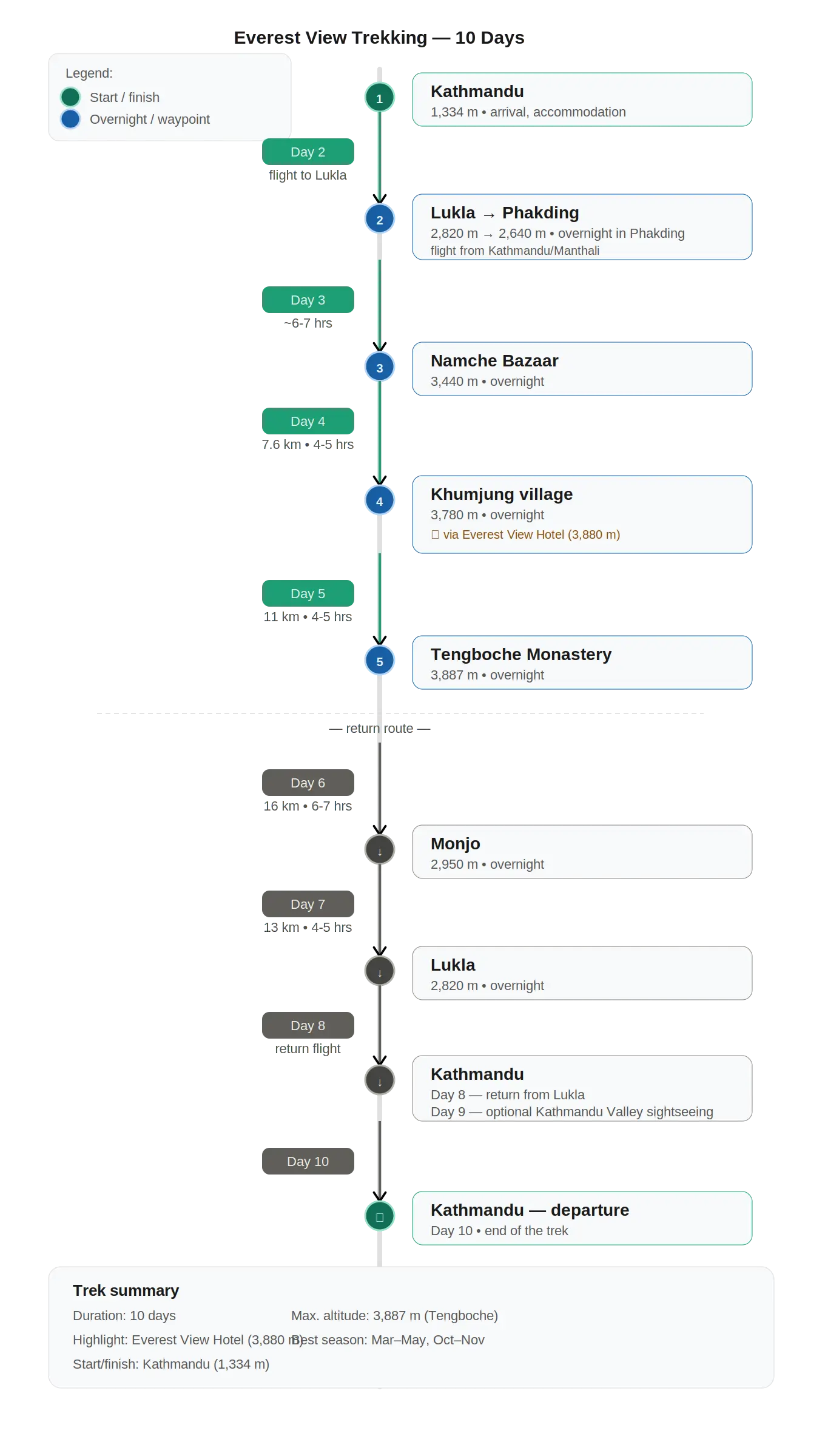
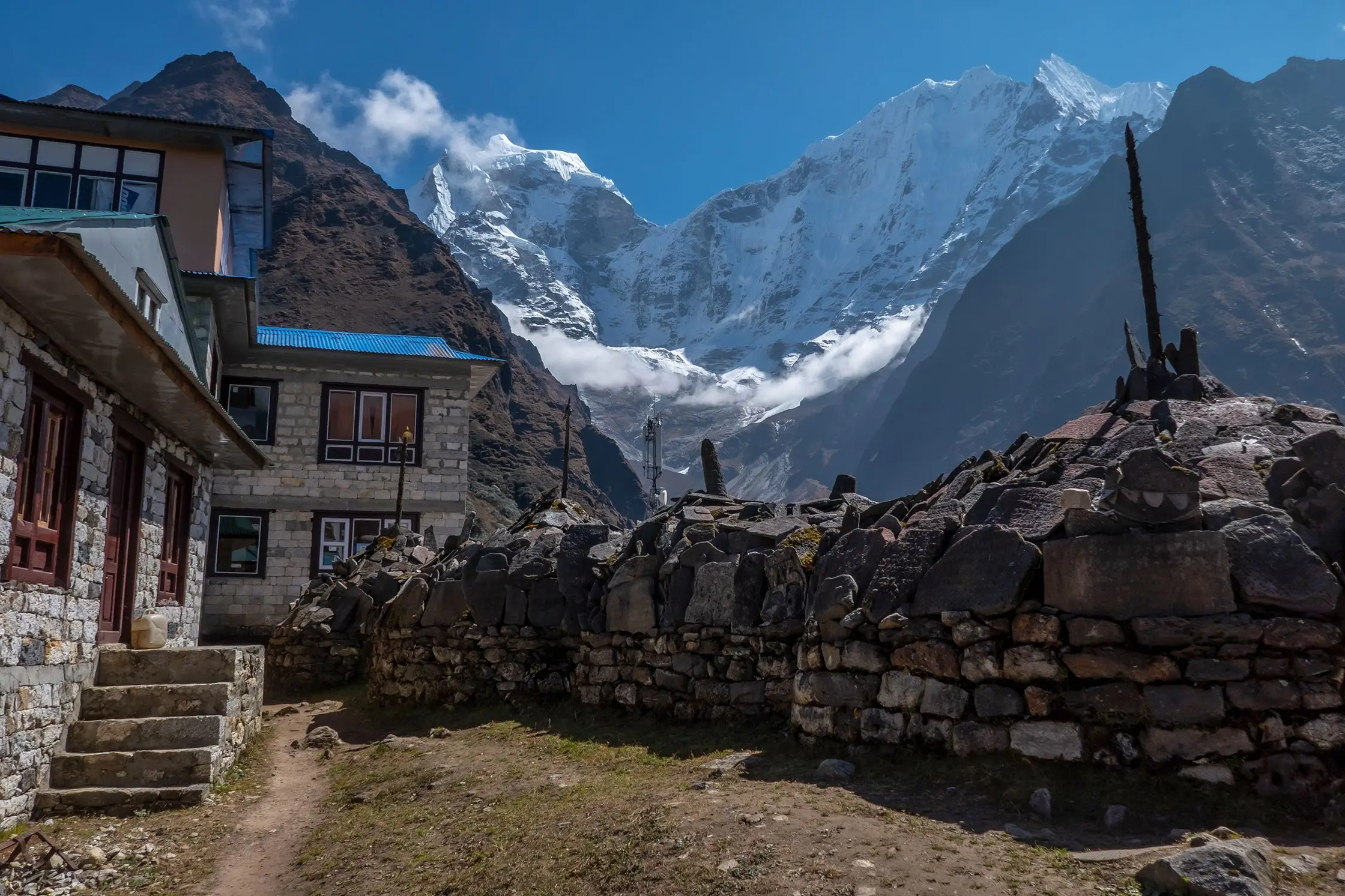
Lukla is situated beneath the Naulekh Himal (6240m) and Kongde Ri (6187m). It is a Sherpa town with a small airstrip called Tenzing-Hillary Airport, named after the late conqueror of Mt. Everest. From Lukla, we will embark on our trek along a gentle, gradual path, passing through charming Sherpa villages. Our journey will first take us to Chheplung (2660 meters), followed by a crossing of the Thado Koshi River (2540 meters) via a suspension bridge. From the bridge, we will enjoy impressive views of Mt. Kusum Kanguru (6367m). We will continue to the Buddhist village of Ghat before reaching our overnight stop at Phakding (2640m), located near the Dudh Kosi River. The trek will take approximately 3 to 4 hours, covering 6.2 kilometers.
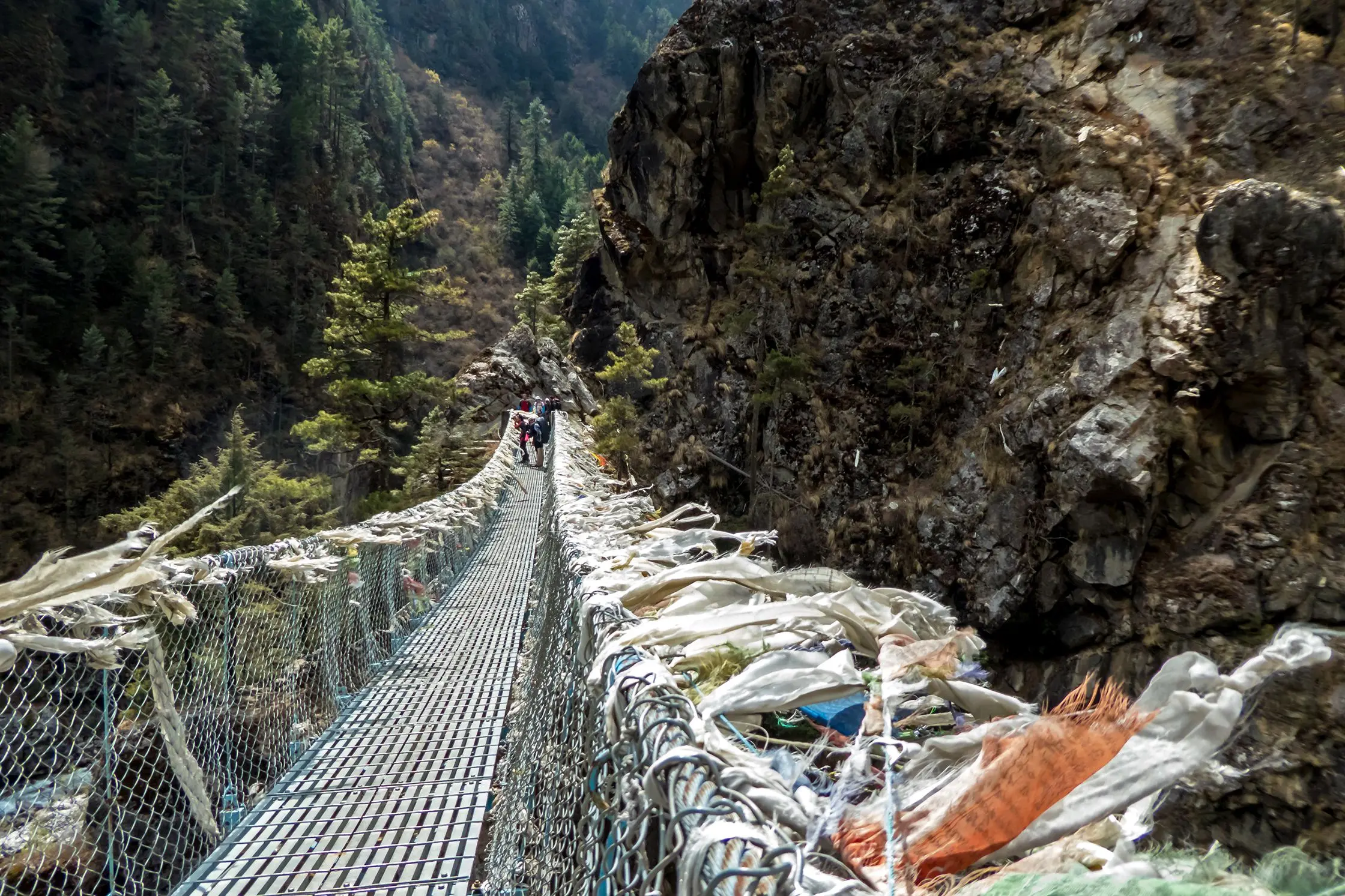
This 7.4 km trek takes about 6 to 7 hours. We begin our trek along the northern banks of the Dudh Koshi River, crossing several suspension bridges along the way. The trail takes us through Toc Toc, Benker, Chumoa, and Monjo. We will reach the Sagarmatha National Park Check Post, Jorsalle Village, and the Hillary Suspension Bridge as we hike. This impressive double suspension bridge, often called the “Windy Bridge,” hangs at a dizzying height above the Dudh Kosi River, marking the point where the “real mountains” begin.
If you're interested in an adrenaline rush, you can opt to go bungy jumping from the Lower Hillary Bridge, though this will be at your own expense as it's not included in our program.
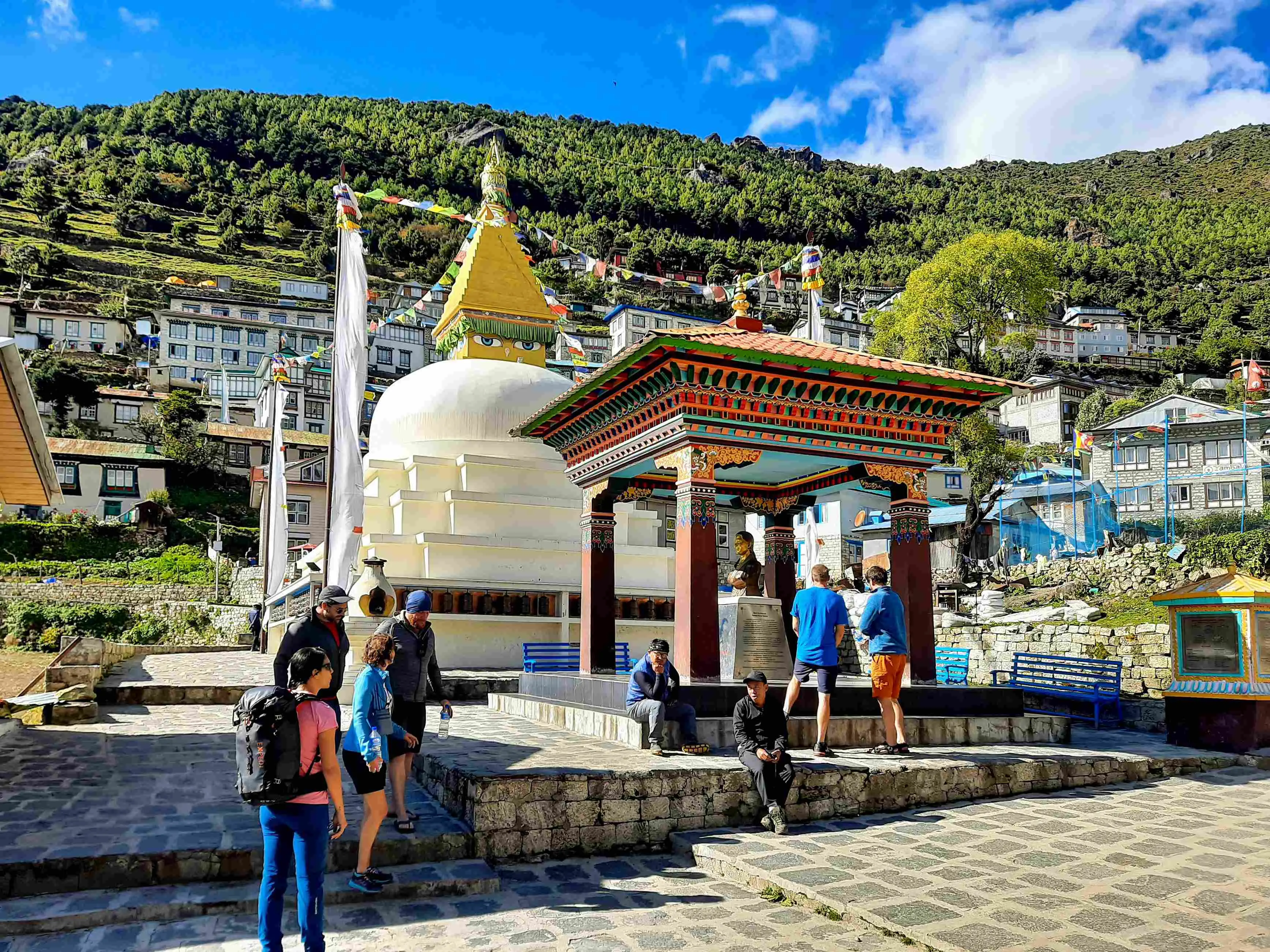
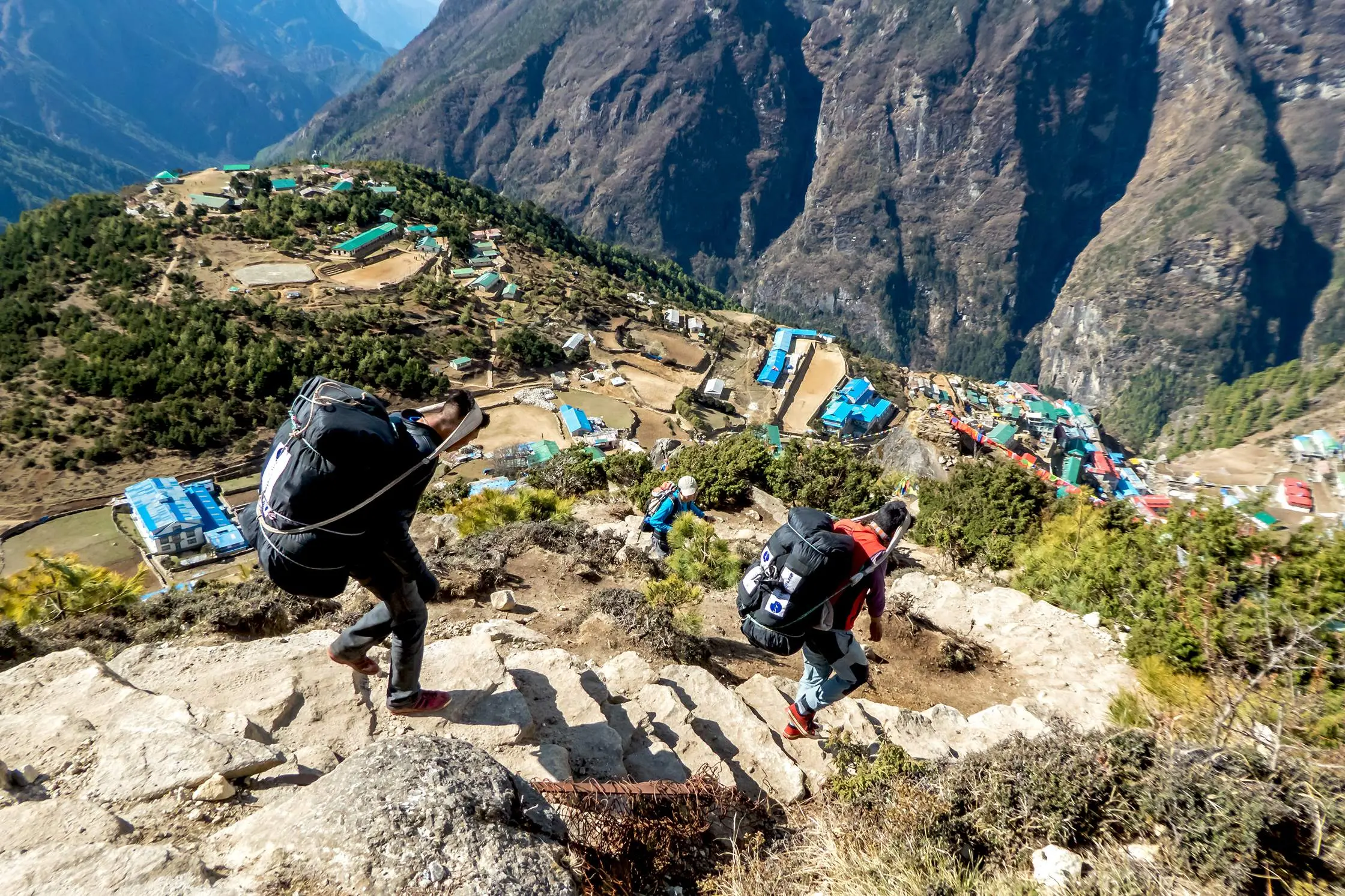
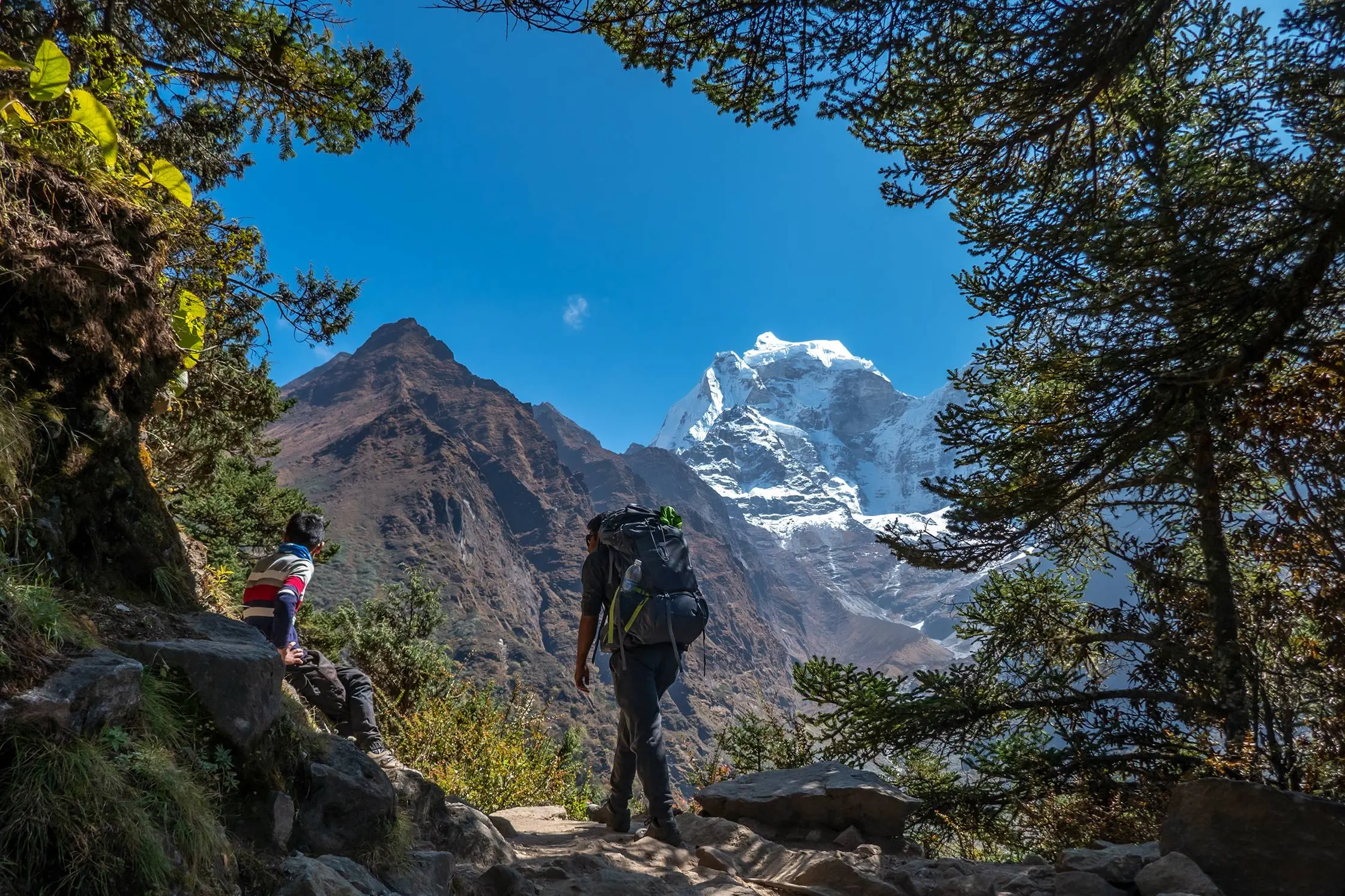
After crossing the bridge, we ascend through a thick, dense forest. From this forest, you'll get your first glimpse of Mt. Everest. However, we will push further to reach Namche Bazaar, a renowned Sherpa town often referred to as the capital of the Sherpa people. We will stay overnight at a hotel in Namche Bazaar.
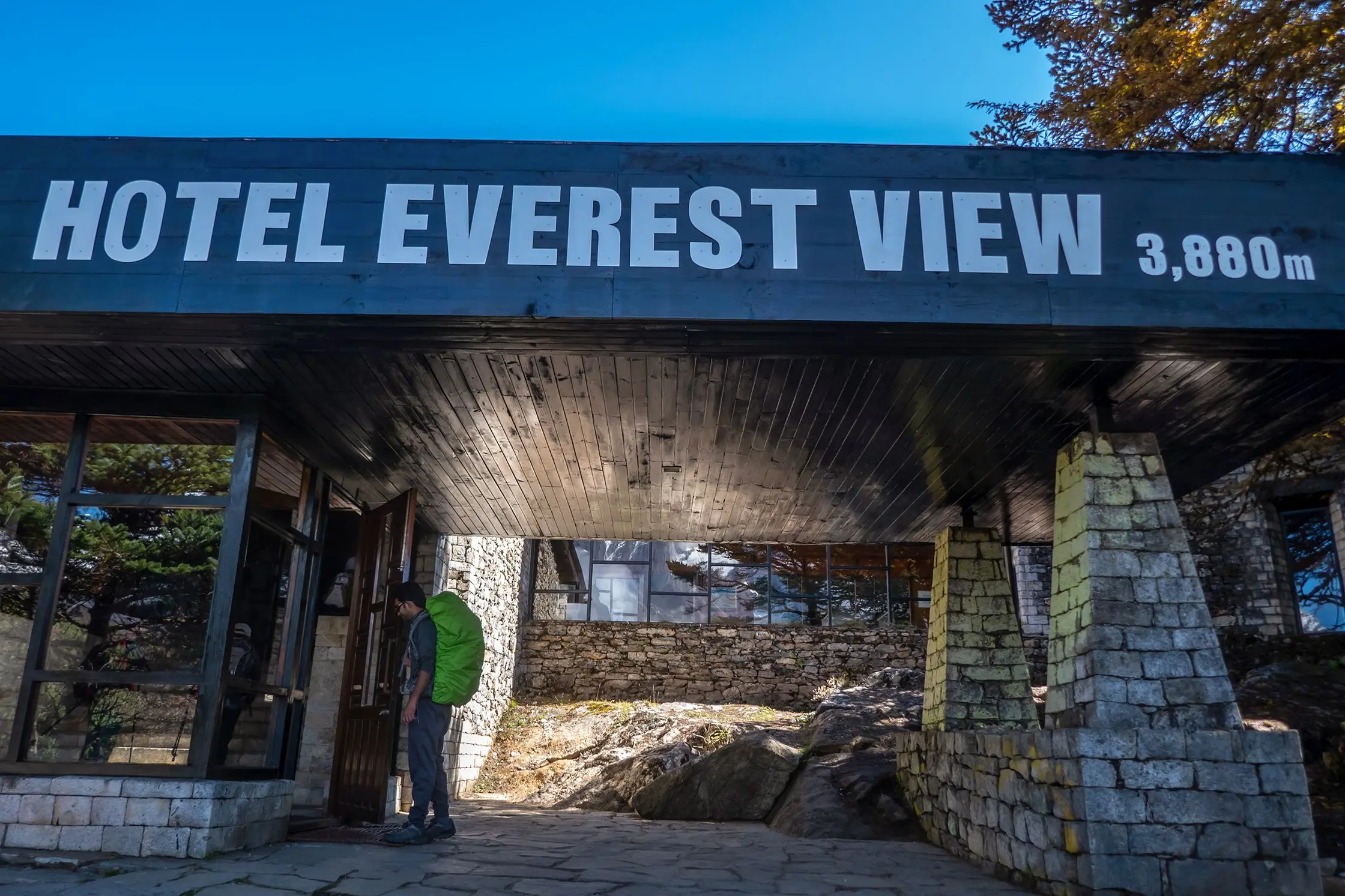
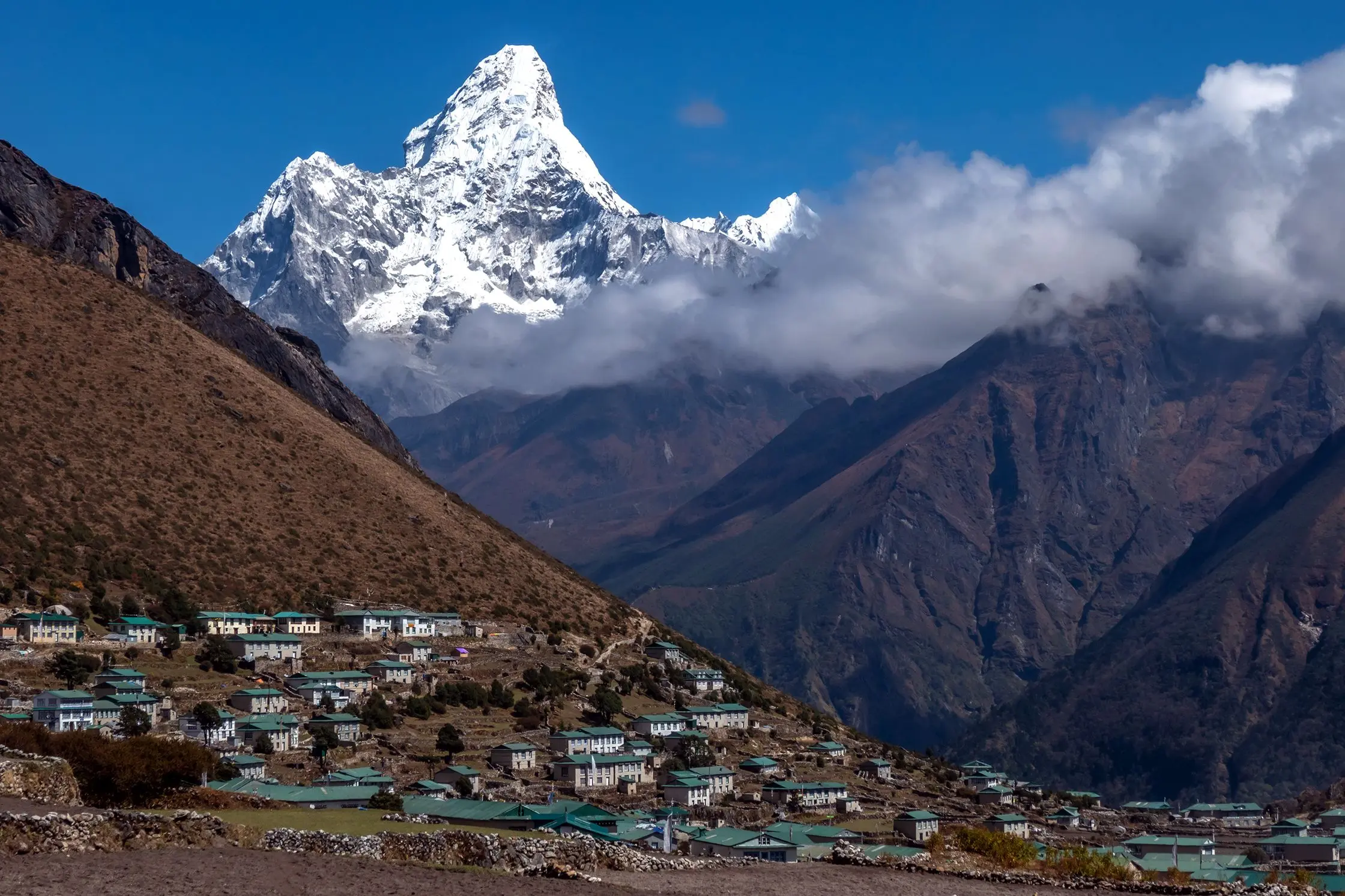
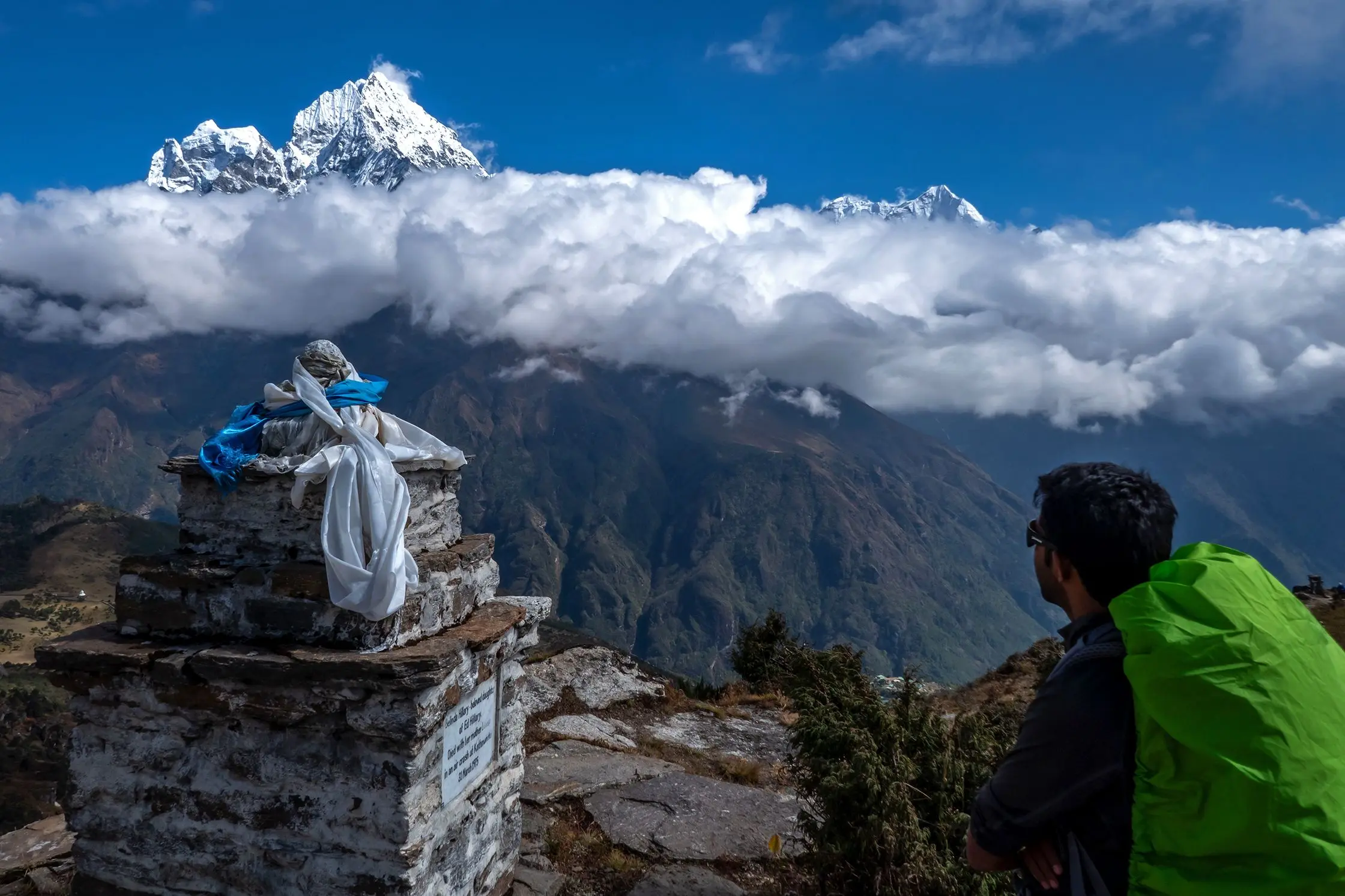
Today, we will hike to the Everest View Hotel via Syangboche Airport, where we can enjoy stunning views of the Himalayas, including Mount Everest (8848m), Lhotse (8516m), Ama Dablam (6856m), Thamserku (6608m), Kangtega (6979m), Mount Kusum Khangaru (6367m), Kongde (6011m), Tawoche Peak (6367m), Cholatse (6335m), Imja Tse (Island Peak) (6179m), and Khumbila, also known as the God of Khumbu (5761m). We will spend the night at a teahouse in Khumjung village.
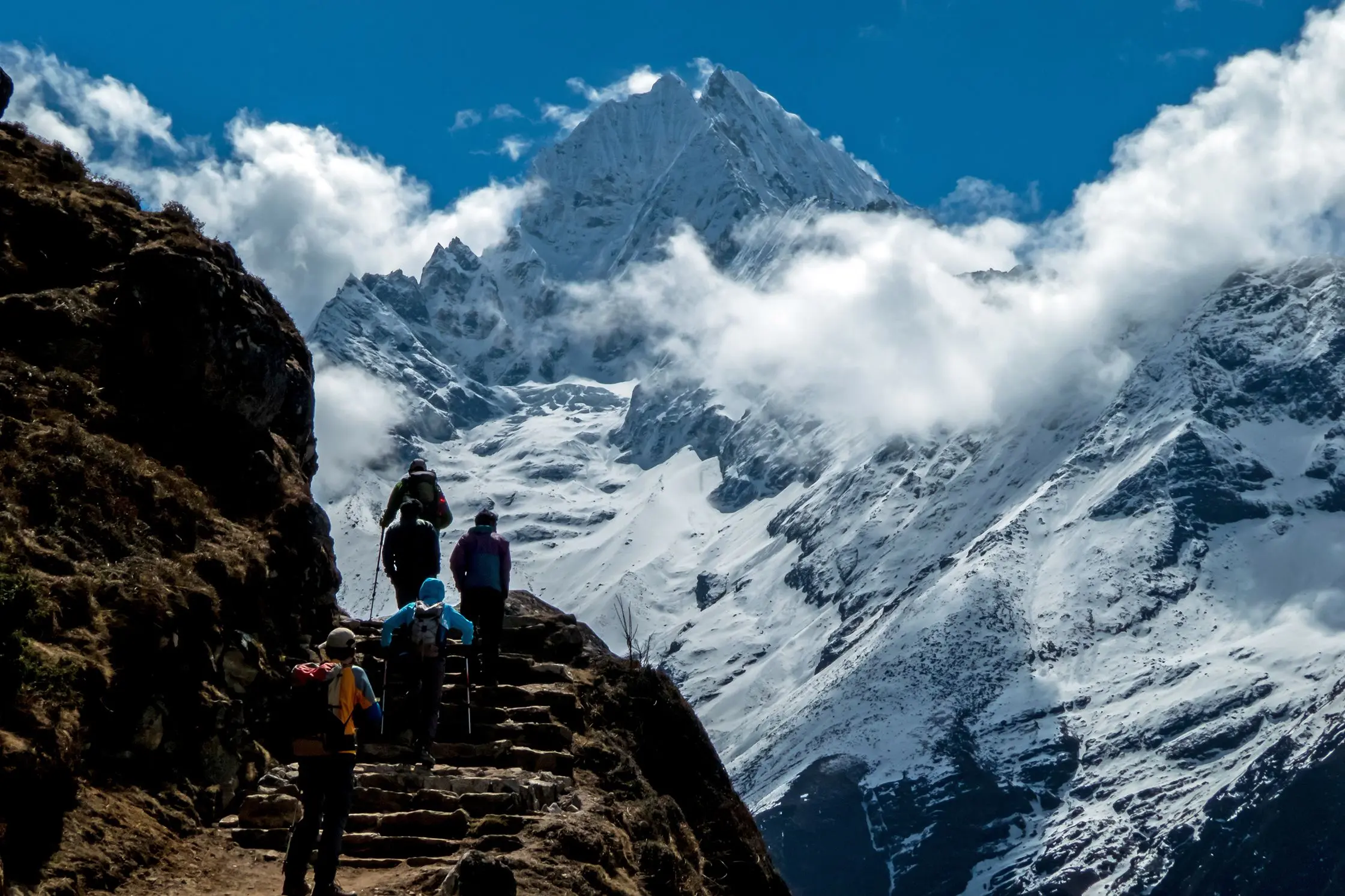
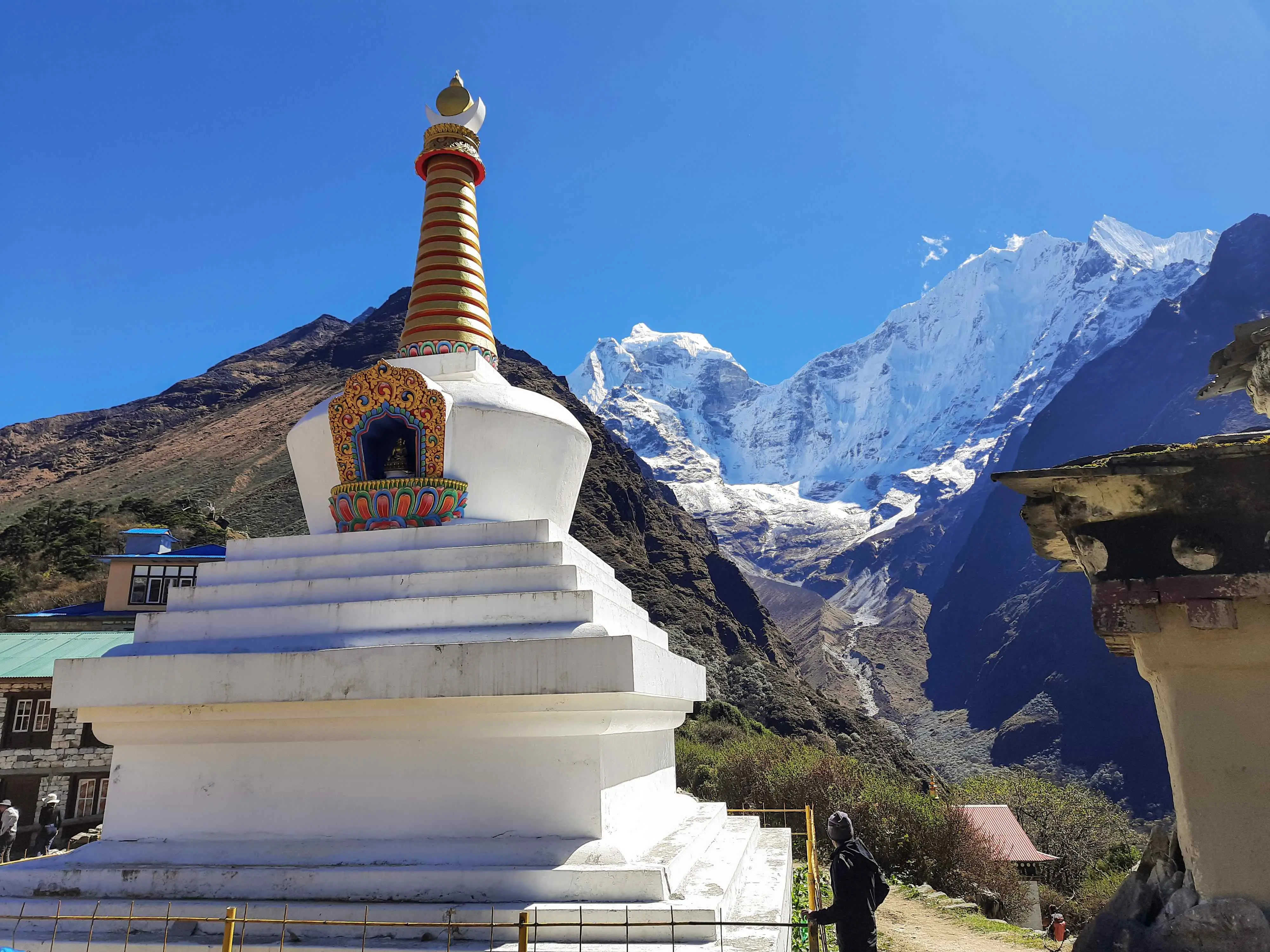
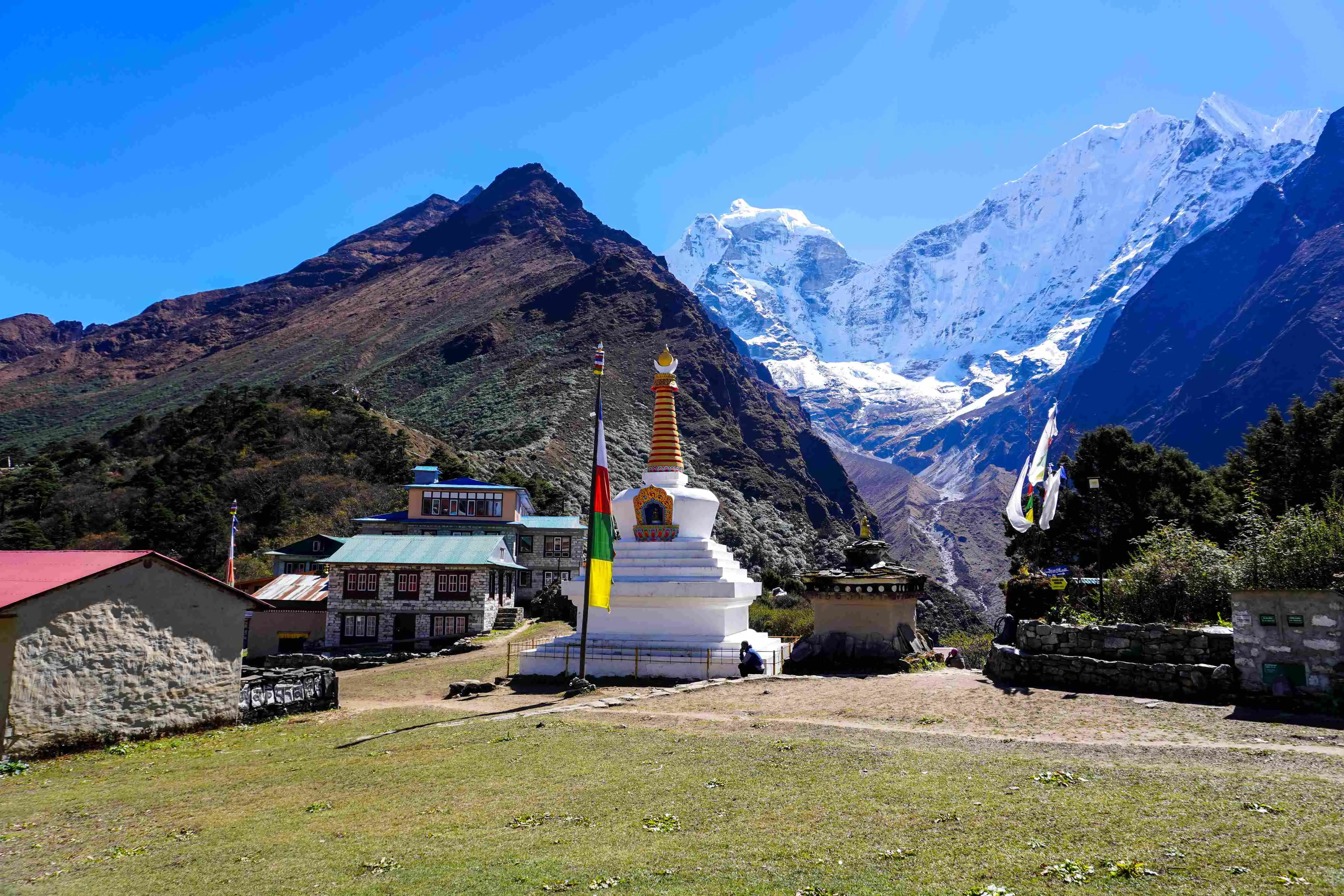
The trek descends to the Imja Tse River at Phunge-Tenga (3313m) and then uphill through rhododendron and pine forests, culminating in a visit to the famous Tengboche Monastery, a Tibetan Buddhist monastery of the Sherpa community. The monastery is the largest gompa in the Khumbu region of Nepal. It offers panoramic views of Mount Everest (8848m), Nuptse (7861m), Lhotse (8516m), Kangtega (6979m), Thamserku (6608m), Kwangde Ri (6187m), and Ama Dablam (6856m). Overnight at the teahouse in Tengboche.
The trek begins with a descent to the Imja Tse River, followed by a steep climb for approximately an hour to reach Sanasa. After that, the path becomes more gradual, featuring a series of short ups and downs as you make your way to Namche Bazaar. The journey continues with a descent into the Dudh Kosi river valley, ultimately leading to Monjo village. Overnight at the teahouse in Monjo.
The trek follows the main Everest Base Camp route, passing through Chumoa, crossing the Dudh Kosi River, and reaching Lukla, the Khumbu Valley's domestic airport. Overnight stay at a teahouse in Lukla.
However, during peak season, flights usually go to Ramechhap Airport in Manthali instead. The flight time from Lukla to Kathmandu is approximately 40 minutes, while the flight to Manthali takes about 20 minutes. The drive from Manthali to Kathmandu takes 5 to 6 hours by private vehicle and 6 to 7 hours by bus. Overnight at a hotel in Kathmandu.
If you are not interested, it can be removed from the itinerary and those shortening that program by one day.
After breakfast, join our tour guide to explore Kathmandu Valley’s cultural and historical UNESCO World Heritage sites. We’ll begin at Boudhanath, home to the impressive Boudhanath Stupa, one of the largest Buddhist shrines in the world, where you can witness Buddhist monks in prayer. Next, we’ll visit Pashupatinath, Nepal’s most revered Hindu temple, along the sacred Bagmati River. At this site, you will see Hindu holy men (sadhus) meditating, pilgrims bathing in the river, and occasionally, funeral pyres burning on the ghats, highlighting the blend of spirituality and tradition. Our journey continues to Kathmandu Durbar Square, where you’ll marvel at the temple of Goddess Kumari and learn about the captivating legends of the valley. Overnight at a hotel in Kathmandu.
Our airport representative will drop you off at Kathmandu International Airport for your outward journey.
These costs are usually your responsibility. Depending on the selected itinerary, some or all these costs are excluded from the quoted price of the package.
Cost of packages for the Everest Region.
The cost of trekking packages in the Everest Region varies based on several factors, including trek duration, the number of trekkers, whether the trip is private or on a group basis and whether you choose a budget or luxury experience, the season, porter service requirements, but guides are an integral part of this trek. The modes of transportation and types of accommodation also vary. The Everest Region has several accommodation facilities: Tea Houses, Guest Houses, and Hotels. All the rooms have twin-sharing arrangements during the journey, so you must share them with other trekkers. You may, however, reserve a separate room, but it will be more expensive. Prices for these treks generally range from 1450 USD to 2000 USD for the Everest View Trek and 1900 USD to 3000 USD for the Everest Base Camp Trek per person (based on a single person) and higher for longer treks. For luxury packages, the price could be double. Also, the larger your group, the lower the per-person cost, as some costs could be shared, like transportation by private vehicle or accommodation.
TMT specializes in all-inclusive trekking packages from Kathmandu, some with heritage sightseeing tours. Depending on accommodation, these packages can be budget-friendly adventures or luxurious getaways. We can also provide individually tailored packages to match your interests and preferences. Don't hesitate to contact the TMT team for a personalized quote based on your itinerary and preferred options.
The cost of these all-inclusive packages typically includes transportation from and to the international airport from your hotel, accommodation at the hotels in Kathmandu and in local lodges or guesthouses, meals (except lunch and dinner in Kathmandu), and the services of a licensed trekking guide and porter. We also include the cost of all necessary permits, such as the Sagarmatha National Park Permit, the Pasang Lhamu Rural Municipality Permit, the Trekking Permit (TIMS), and all the applicable local taxes. Please refer to the Included/Excluded Services and Items section for details.
Using an agency like TMT offers numerous benefits that make your trip much more comfortable. When you book a trek package with us, you won't have to worry about where to go, how to get there, or finding a place to stay overnight, especially during peak seasons. Traveling with a licensed local guide is also significantly safer. Do you have experience with high-altitude trekking? Are you familiar with how to recognize the signs of high-altitude sickness and how to manage it? By choosing TMT, the trek becomes a shared responsibility between you and the agency.
Where does the money you pay to the agency go? Almost all of it goes "back to the mountain," so to speak. Only a tiny fraction is spent on office expenses.
Transportation:
Trekking Permits:
Lodging Accommodations:
Food and drinks:
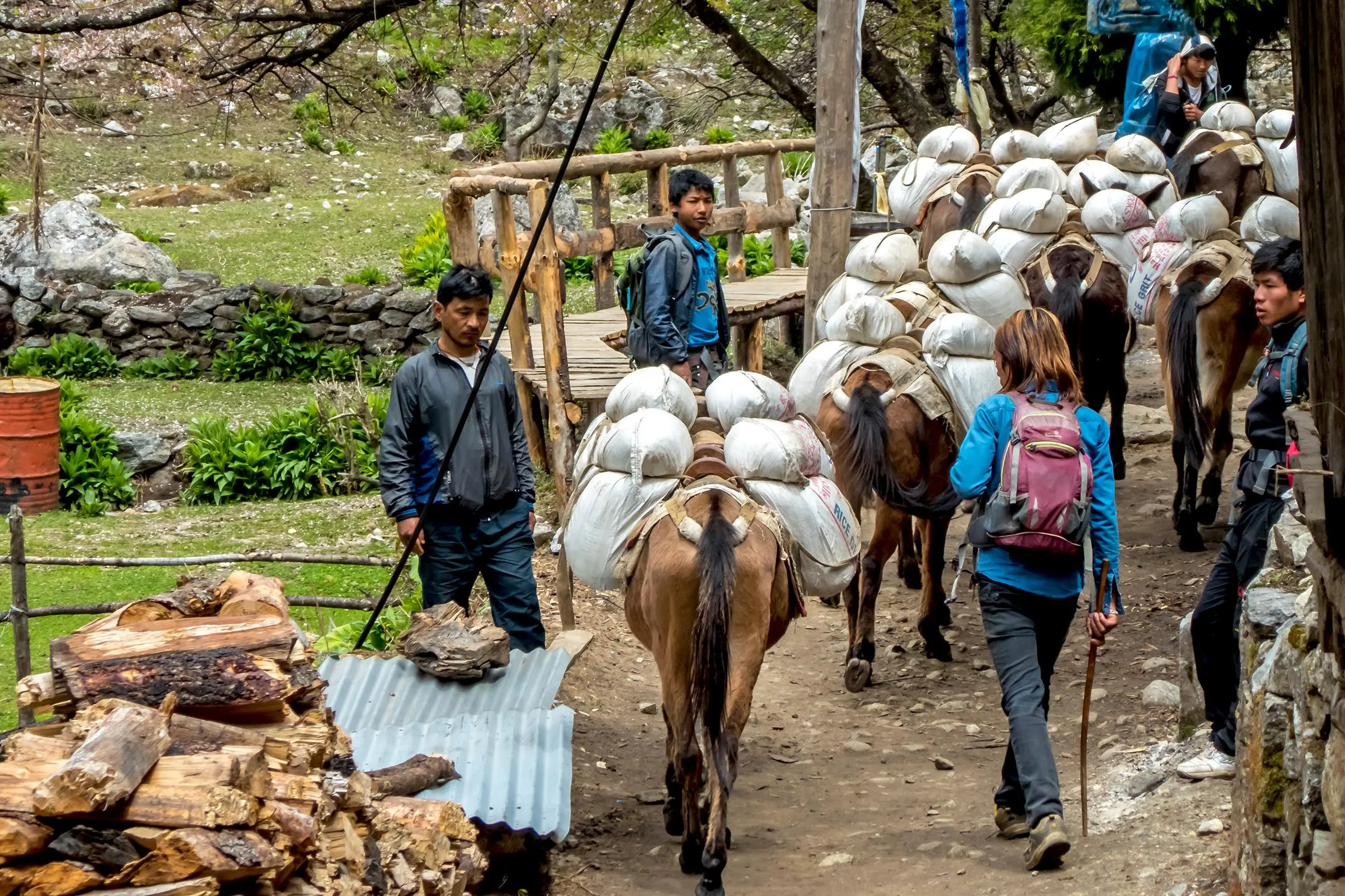
Cost for Guides and Porters:
Miscellaneous Costs.
Trekking Gear Cost:
Internet Wi-Fi and device charging Costs:
Tips and Donations:
Souvenirs and Gifts:
Nepal Tourist Visa fee and travel insurance:
You may also be responsible for additional costs not listed here. Please refer to the Included/Excluded Services and Items section for details.
The Everest View Trek is a short and scenic trekking adventure in the Everest region of Nepal that offers breathtaking views of the world’s highest mountain, Mount Everest, without requiring a long and physically demanding expedition. This trek is ideal for travelers who have limited time but still want to experience the beauty of the Himalayas, Sherpa culture, traditional villages, monasteries, and stunning mountain landscapes. Trail Mania Trekking organizes this trek with a carefully designed itinerary that includes comfortable pacing, proper acclimatization, and unforgettable experiences in the Khumbu region.
The Everest View Trek with Trail Mania Trekking is generally completed in a 10-day itinerary, including arrival in Kathmandu, trekking days, return to Kathmandu, sightseeing, and final departure. The actual trekking begins with a scenic flight from Kathmandu or Manthali to Lukla, followed by the trail through Phakding, Namche Bazaar, Khumjung village, Tengboche Monastery, and Monjo before returning to Lukla. The itinerary is designed to provide enough time to enjoy the natural beauty, local culture, and mountain views while allowing proper rest and acclimatization.
Yes, the Everest View Trek is suitable for beginners with a reasonable level of fitness and a positive attitude toward walking in the mountains. Unlike higher-altitude Everest Base Camp routes, this trek does not require technical climbing skills or previous high-altitude trekking experience. However, trekkers should be prepared for several hours of walking each day on mountain trails, including uphill and downhill sections. Trail Mania Trekking provides guidance, experienced trekking staff, and a well-planned itinerary to help beginners complete the journey comfortably and safely.
The Everest View Trek offers many memorable highlights, including spectacular views of Mount Everest, Lhotse, Ama Dablam, Thamserku, and other Himalayan peaks. Trekkers can explore the vibrant Sherpa town of Namche Bazaar, visit the famous Everest View Hotel, experience the peaceful atmosphere of Tengboche Monastery, and discover traditional villages such as Khumjung. The trek also provides opportunities to learn about Sherpa traditions, Himalayan lifestyles, Buddhist culture, and the natural beauty of Sagarmatha National Park. Trail Mania Trekking ensures travelers enjoy both cultural and scenic experiences throughout the journey.
The best seasons for the Everest View Trek are spring (March to May) and autumn (September to November) because the weather is generally stable, skies are clearer, and mountain views are excellent. During spring, trekkers can enjoy blooming rhododendron forests and pleasant temperatures, while autumn offers crisp air and spectacular Himalayan scenery. Winter trekking is also possible for those who prefer fewer crowds, but temperatures can be colder. Trail Mania Trekking can help you choose the best departure period based on your preferences, weather conditions, and travel schedule.
During the Everest View Trek, accommodation is provided mainly in comfortable local teahouses and lodges operated by Himalayan communities. These teahouses offer basic but cozy rooms, traditional meals, warm dining areas, and a chance to experience local hospitality. In Kathmandu, accommodation is arranged in a comfortable hotel according to the package. Trail Mania Trekking carefully selects reliable accommodations to ensure trekkers have a pleasant stay throughout the journey. While facilities become more basic at higher elevations, the unique mountain environment and welcoming Sherpa culture make the experience special.
The Everest View Trek is considered a moderate-level trek because it involves walking at high altitude with several uphill and downhill sections. Daily trekking usually requires around 4 to 7 hours of walking depending on the route and destination. The highest overnight point is around Khumjung village at approximately 3,780 meters, so proper acclimatization is important. Trekkers should maintain good physical fitness, stay hydrated, and walk at a comfortable pace. Trail Mania Trekking provides experienced guides who assist trekkers with altitude awareness, trail conditions, and overall safety.
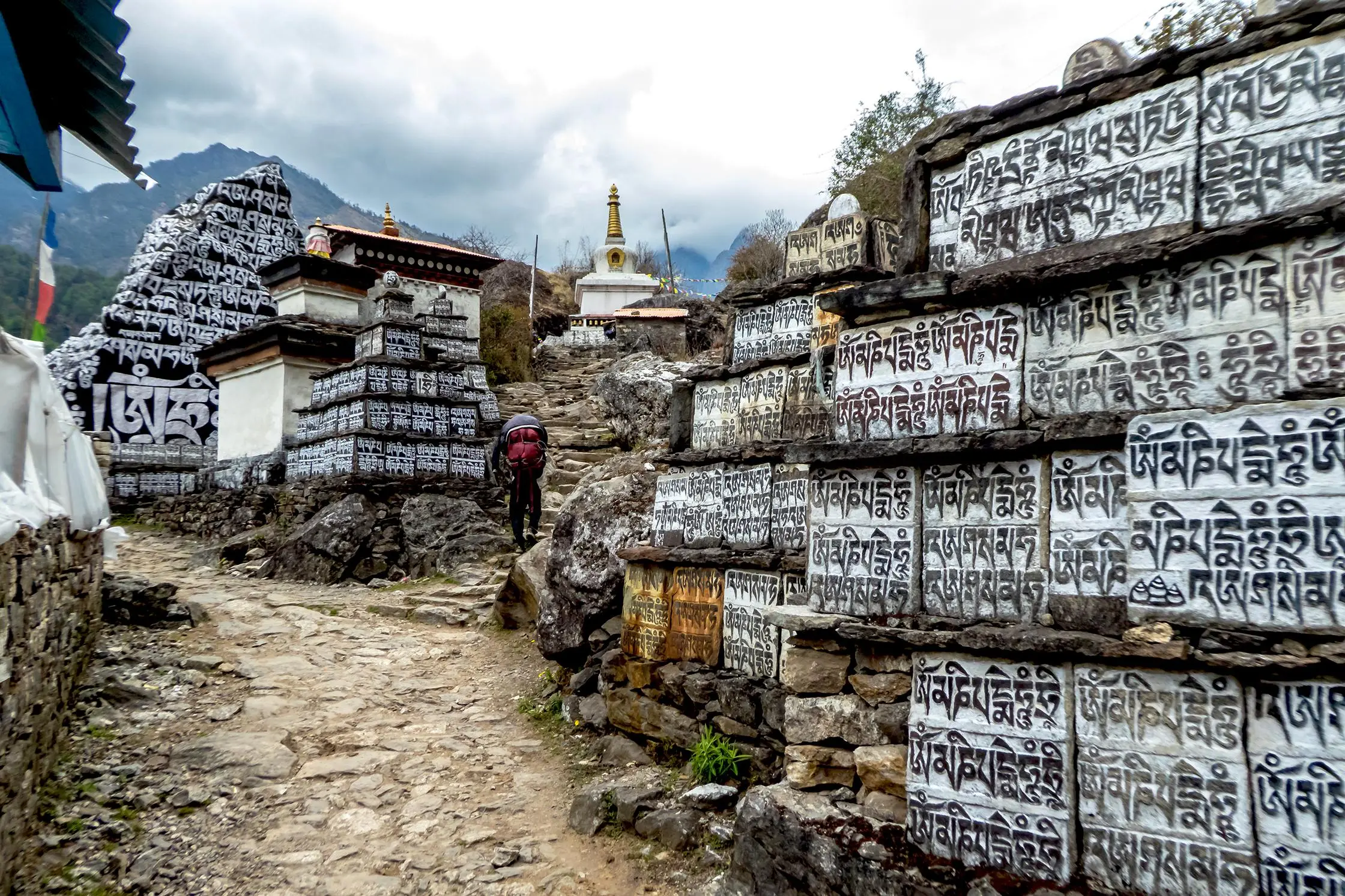
The Everest View Trek provides some of the most impressive Himalayan scenery in Nepal. Trekkers can enjoy panoramic views of Mount Everest, Lhotse, Nuptse, Ama Dablam, Island Peak, and many other surrounding peaks. The viewpoint near the Everest View Hotel is one of the best places to admire Everest and the surrounding mountains. Along the route, travelers also experience beautiful forests, rivers, suspension bridges, colorful prayer flags, and traditional Sherpa settlements. Trail Mania Trekking ensures that the itinerary includes the best viewpoints and cultural attractions of the Everest region.
Trekkers need specific permits to enter the Everest region, including the Sagarmatha National Park entry permit and the local Khumbu Pasang Lhamu Rural Municipality permit. These permits help support conservation efforts, environmental protection, and local development in the region. Trail Mania Trekking manages the necessary paperwork and arrangements before and during the trek, allowing travelers to focus on enjoying the journey. Our trekking team ensures that all required documents are prepared properly so the adventure can proceed smoothly without unnecessary complications.
For the Everest View Trek, trekkers should pack suitable clothing and equipment for changing mountain weather conditions. Essential items include warm layers, trekking boots, a waterproof jacket, comfortable trekking pants, gloves, a hat, sunglasses, sunscreen, a water bottle, personal medicines, and a small backpack. A sleeping bag can also be useful, especially during colder months. Trail Mania Trekking provides a detailed packing checklist before departure to help travelers prepare properly. Packing light but carrying necessary essentials is recommended for a comfortable and enjoyable trekking experience.
Yes, the Everest View Trek itinerary includes an optional sightseeing day in Kathmandu Valley after returning from the mountains. Travelers can explore UNESCO World Heritage Sites, ancient temples, historical monuments, and cultural attractions around Kathmandu. Popular places include old city areas, Buddhist stupas, and traditional cultural landmarks. This extra day allows visitors to relax after trekking and experience Nepal’s rich history and heritage. Trail Mania Trekking can arrange sightseeing activities with transportation and local guidance according to your interests and available time.
Trail Mania Trekking provides professionally organized trekking experiences with a focus on safety, comfort, and authentic Himalayan adventures. Our experienced guides, carefully planned itineraries, local knowledge, and personalized services help travelers enjoy the Everest region with confidence. We understand that every trekker has different expectations, so we provide flexible support, reliable arrangements, and cultural experiences along the route. Choosing Trail Mania Trekking means traveling with a trusted team dedicated to creating memorable journeys while respecting local communities and the natural environment of the Himalayas.
 >
> >
>