| Price per person | No of people |
|---|---|
| $1,350 - $2,300 | 1+ |
Price range 1350-2300 USD, please contact with us to get personal quotation.
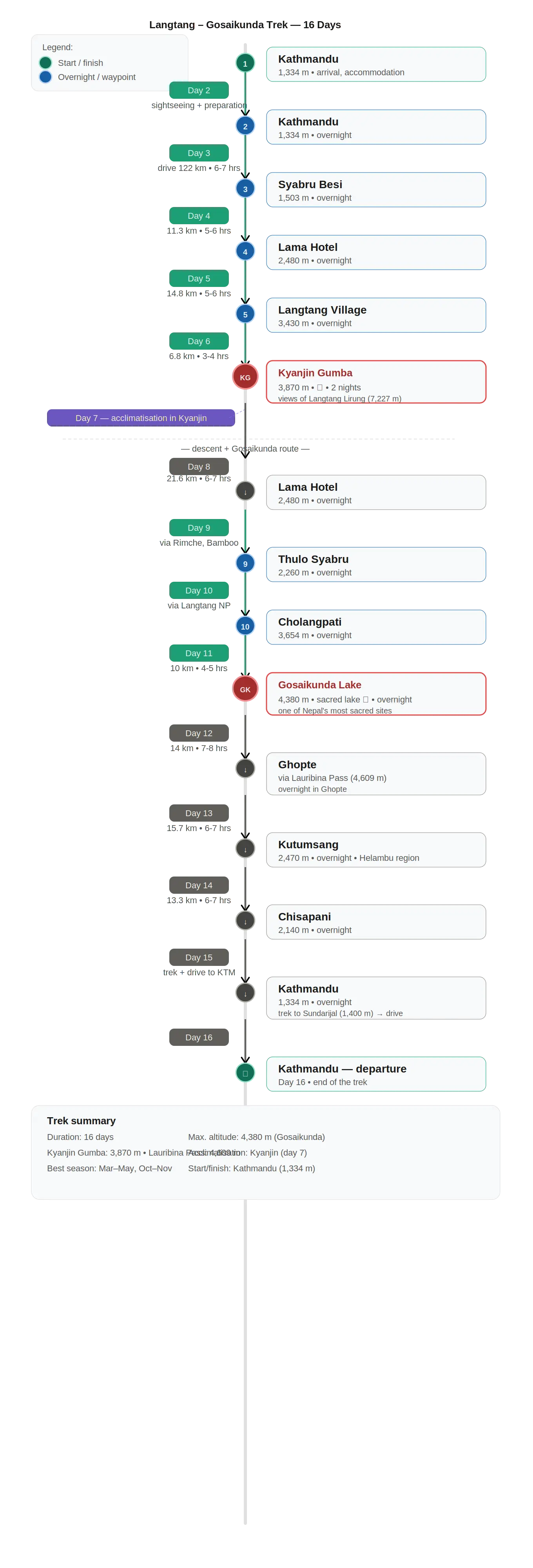
Transfer from the Airport to the hotel, and short briefing about the trip.Overnight at a hotel in Kathmandu.
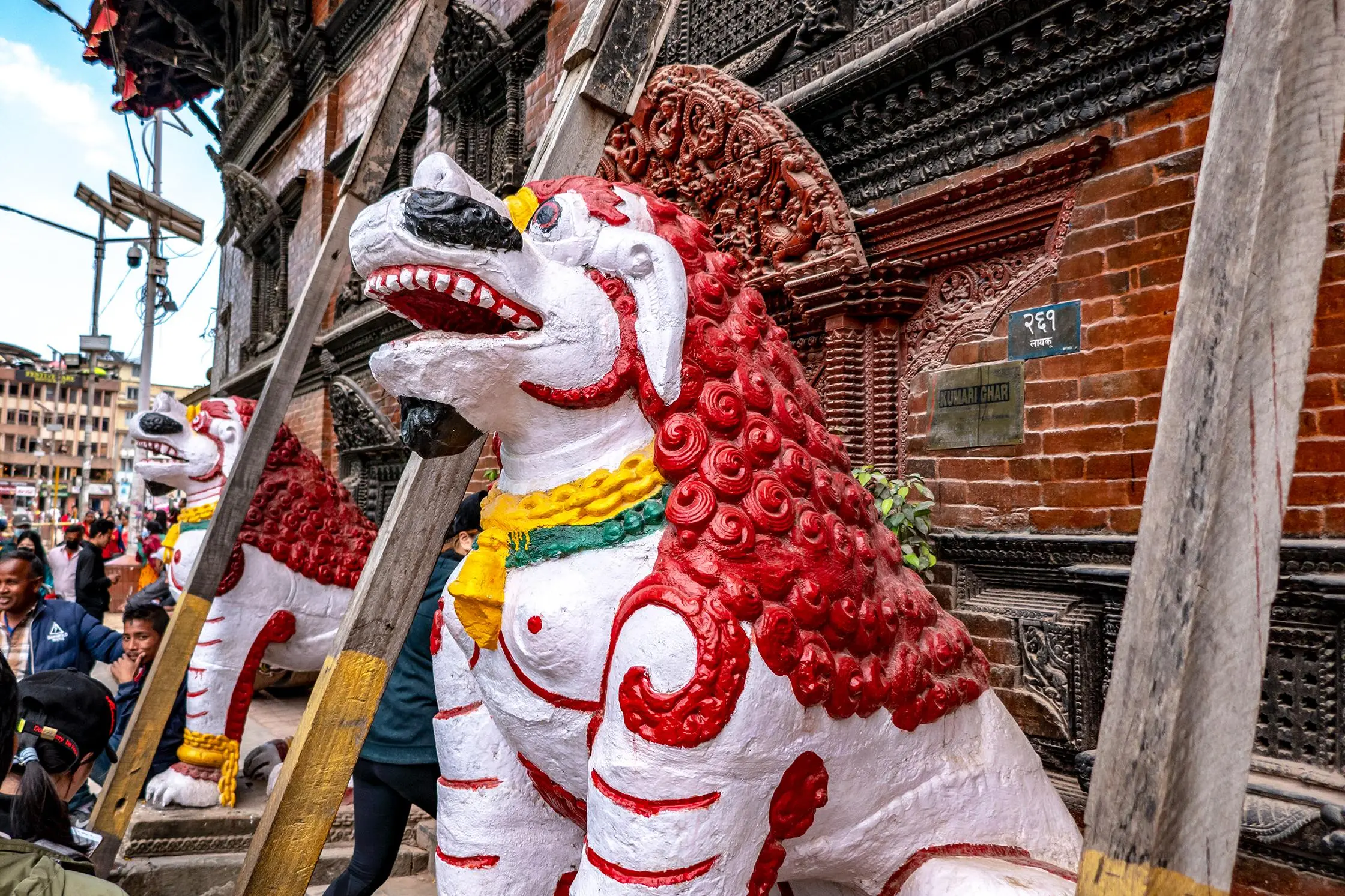
After breakfast, join our tour guide to explore Kathmandu Valley’s cultural and historical UNESCO World Heritage sites. We’ll begin at Boudhanath, home to the impressive Boudhanath Stupa, one of the largest Buddhist shrines in the world, where you can witness Buddhist monks in prayer. Next, we’ll visit Pashupatinath, Nepal’s most revered Hindu temple, along the sacred Bagmati River. At this site, you will see Hindu holy men (sadhus) meditating, pilgrims bathing in the river, and occasionally, funeral pyres burning on the ghats, highlighting the blend of spirituality and tradition. Our journey continues to Kathmandu Durbar Square, where you’ll marvel at the temple of Goddess Kumari and learn about the captivating legends of the valley. If there is a will and enough time, we could also visit Monkey Temple (Swayambhunath). In the evening, we will have a trek preparation meeting. You will spend a second night at a hotel in Kathmandu.
The private vehicle will pick you up from the hotel and drive directly to Syabru Besi, but to catch the public bus, your guide will pick you up from your hotel early in the morning to take you to the new bus park.
You drive north of Kathmandu through scenic foothills to reach Syabru Besi at 1503 meters. Along the way, you pass through well-known locations such as Kakani (2145m), Trisuli Bazaar (548m), Betrawati (620m), Kalikhastan (1390m), and Dhunche (1960m). Syabru Besi is located within Langtang National Park, attracting hundreds of trekkers annually. This picturesque town serves as the gateway to the Langtang region. Overnight at a tea house in Syabru Besi.
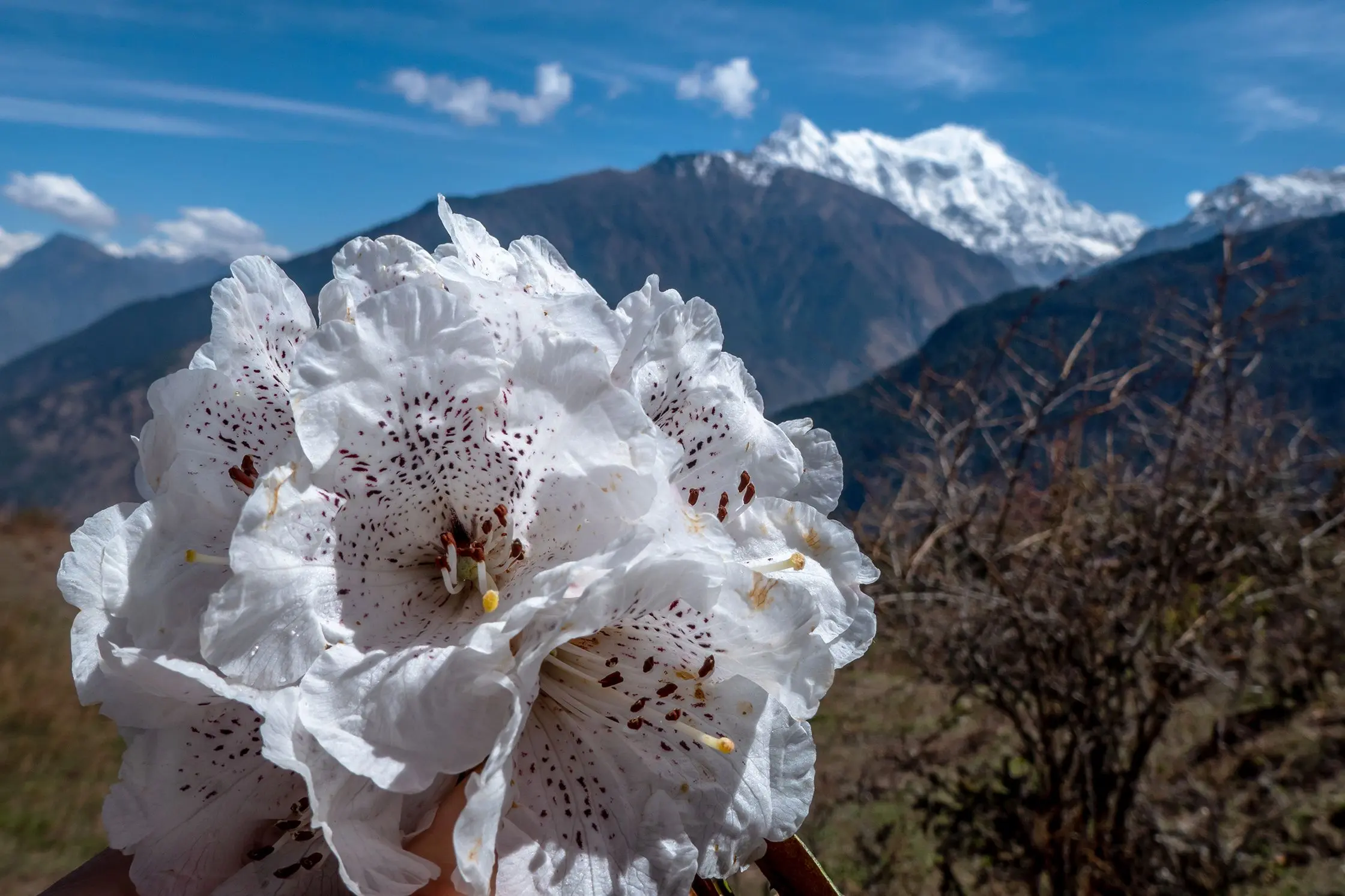
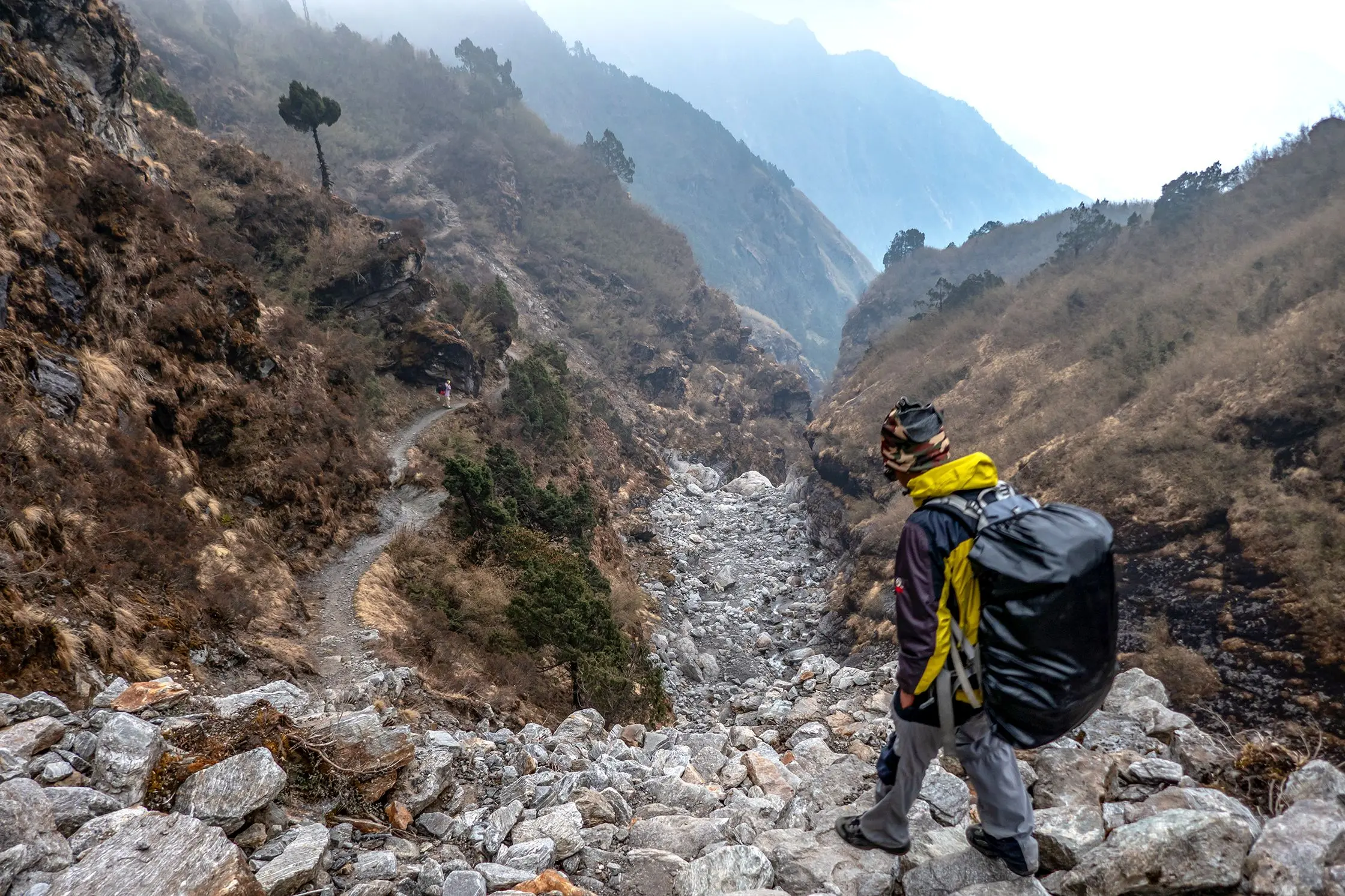
Today marks the first day of our trek as we enter Langtang National Park, one of Nepal's oldest and most ecologically rich national parks. The route gradually descends alongside the Bhote Koshi River, which flows from Tibet, then through a rugged route towards Bamboo (2200m). We will walk along a densely wooded trail with rhododendrons and oak trees. Watch for monkeys swinging in the trees as we make our way up the steep ascent to the Lama Hotel. Overnight at Lama Hotel.
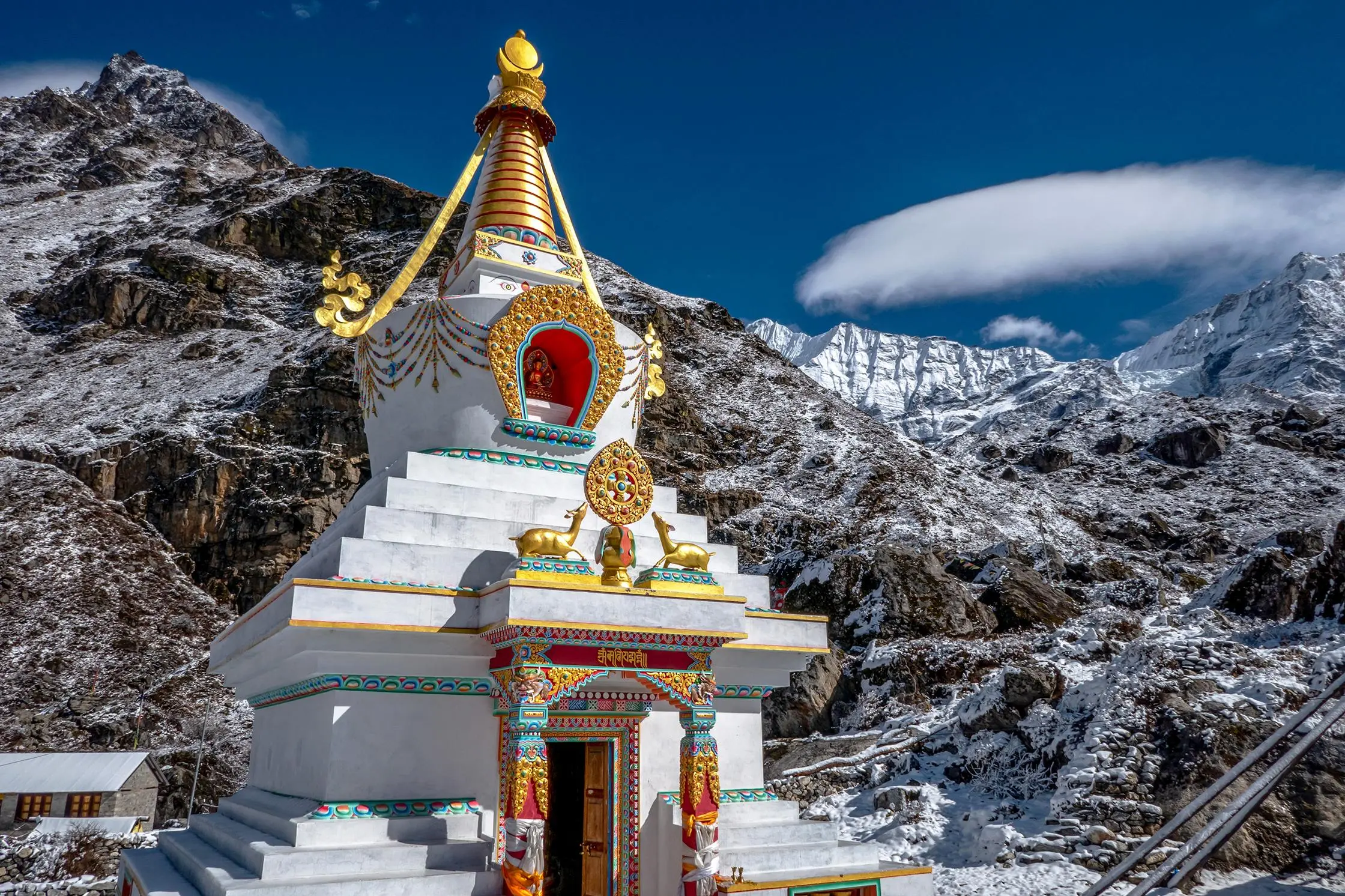
After walking for some time, we catch sight of Langtang Lirung (7227m), the highest peak of the Langtang Himal. After an hour, we will reach Gumanchok (2800m), from where we will climb to a Nepal Army post and a National Park checkpoint at Ghoda Tabela (2970m). The trail ascends gradually as the valley widens. Along the way, we will pass a few teashops in Thangshyap (3140m). The route features many mani stones, water-driven prayer wheels, and several scattered Tamang villages before we arrive in Langtang.
In the devastating earthquake of 2015, Langtang village was swept away by a landslide in mere minutes, resulting in the loss of 243 lives, including 41 trekkers. The new Langtang Village has been rebuilt 100 meters above the ruins of the old village, which is now covered with stones and boulders. There is a memorial called the 'Mani Wall Memorial' dedicated to those who perished during the earthquake. Overnight at a tea house in Langtang.
Today, on our trek through the village of Langtang, we will pass many stone mani walls adorned with Tibetan inscriptions meant to please the gods. The trail gradually climbs past the small villages of Mumdu and Sindum. After crossing the Langtang Khola to the south bank, we ascend through a landscape scattered with large boulders until we reach a moraine. From there, we will have our first views of Kyanjin Gompa ahead of us and the dramatic icefall flowing from Langtang Lirung and Kinshung (6781m) to the north. Beyond the moraine, the trail leads through rocky terrain, climbs towards the gompa, and then quickly descends to Kyanjin Gompa (3870 m).
In the afternoon, we will explore the area around Kyanjin Gompa. This picturesque settlement is nestled at the base of several small peaks, Gang Chhenpo (6388 m), Langshisa (6427m), and Dorje Lakpa (6966m). It is named after the old Buddhist monastery in the village, Kyanjin Gompa. There is a government-run cheese factory where you can sample and purchase yak cheese. If the weather is clear, you can hike to the nearby hill, Kyanjin Ri Lower Peak (4773 m), and enjoy a spectacular sunset over the snow-capped peaks. Overnight at a tea house in Kyanjin Gumba.
Acclimatization does not mean a complete rest day; rather, it entails spending two consecutive nights at the same altitude. During the day, we can hike to a nearby peak of your choice for spectacular views. If you missed it yesterday, the shorter and more popular hike is Kyanjin Ri (4773m), a 4.5 km round trip that takes about 3-4 hours. The more prolonged and strenuous option is Tserko Ri (5033m), a 10.8 km round trip that takes 5-8 hours.
Kyanjin Ri towers over Kyanjin Gumba and has a vertical gain of over 750 m in just a few kilometers. While the distance is short, please do not underestimate this hike; it is incredibly steep and reaches heights of 4700 meters. Conversely, Tserko Ri has a vertical gain of nearly 1500 m to the summit and reaches an elevation of 5000 meters. This hike is challenging due to the steep incline and high altitude, so it should not be taken lightly. The route is relentlessly steep, and combined with the low oxygen levels at this altitude, it can be challenging to manage. Tserko Ri is the best place to see peaks like Langtang Lirung (7227m), Langtang II (6586m), Kinshung (6781m), Yansa Tsenji (6567m) and straddling the Tibetan border are Dorje Lhakpa (6966m), a whole host of over 6000m peaks. As the sun sets, we will return to Kyanjin Gompa for an overnight stay at the same tea house.
We hike alongside the Langtang Khola River, passing Sindum, Mumdu, Langtang Village, Thangshyap, and Ghore Tabela, enjoying picturesque views of green alpine meadows and yaks grazing until we reach Lama Hotel, where we will stay overnight at a tea house.
From there, we will climb steeply to U Kyang (2040 m), pass through Bhatti, and continue to climb steadily. In the final stretch, we will encounter another steep ascent before reaching the charming village of Thulo Syabru. This 10 km trek takes approximately 5 to 6 hours. Overnight at a tea house in Thulo Syabru.
Along the way, you will encounter an army checkpoint and pass through a gompa and several villages. The trail mainly goes through a forest filled with hemlocks, oaks, and rhododendrons, where you may be fortunate enough to see red pandas, a rare and endangered species, although this is quite unlikely. However, if you see one, it will be a remarkable experience to brag about. The 10 km trek takes 4 to 5 hours. Overnight at a tea house in Thulo Syabru.
After two hours of walking, we will reach Lauribinayak (3900m). From this vantage point, we will enjoy a panoramic view of several impressive peaks, including Manaslu (8163m), Langtang Lirung (7227m), Langtang Ri (7205m), and Ganesh Himal (7422m). Ganesh Himal is named after the Hindu god Ganesh, the legendary elephant-headed deity.
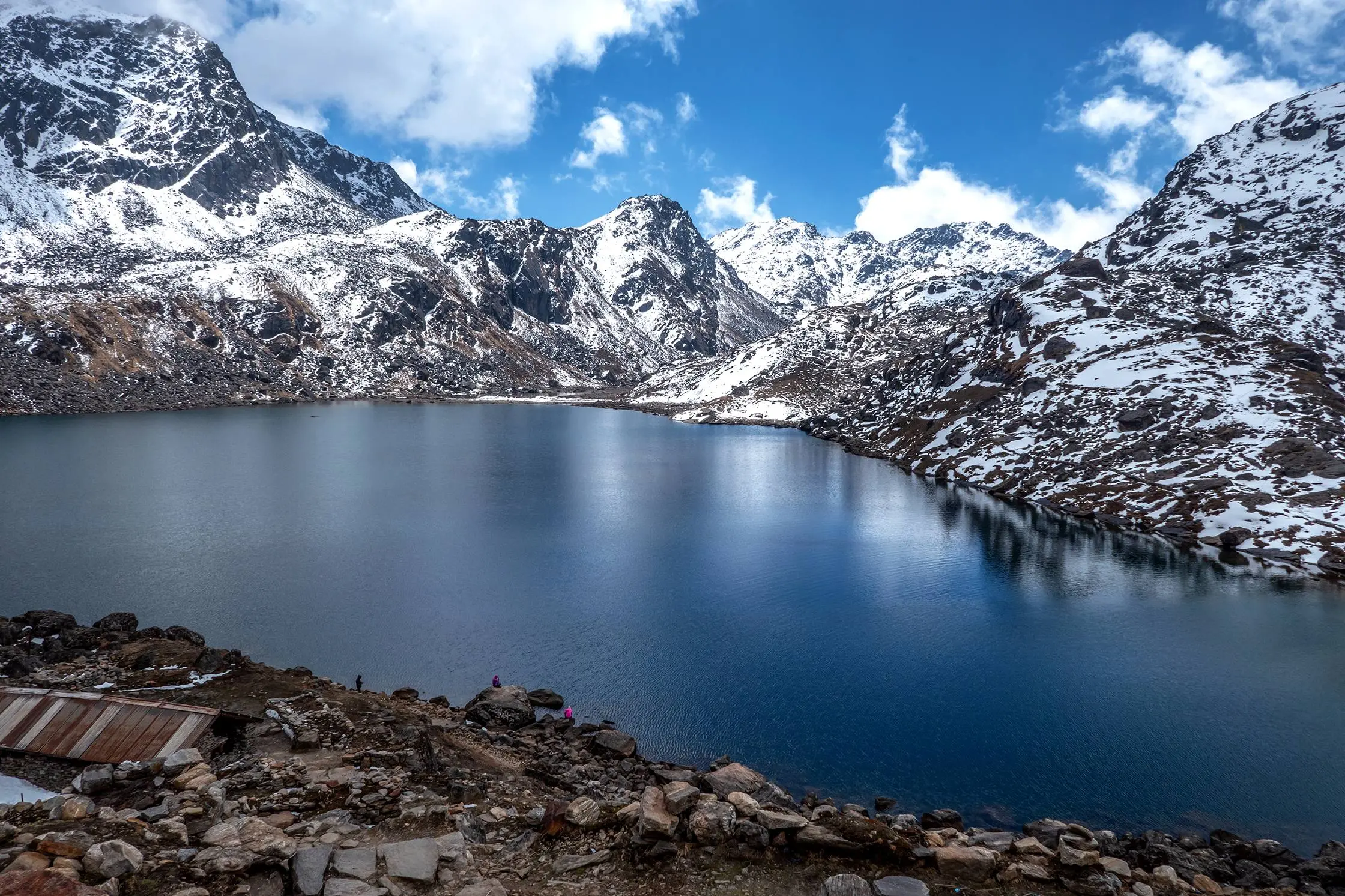
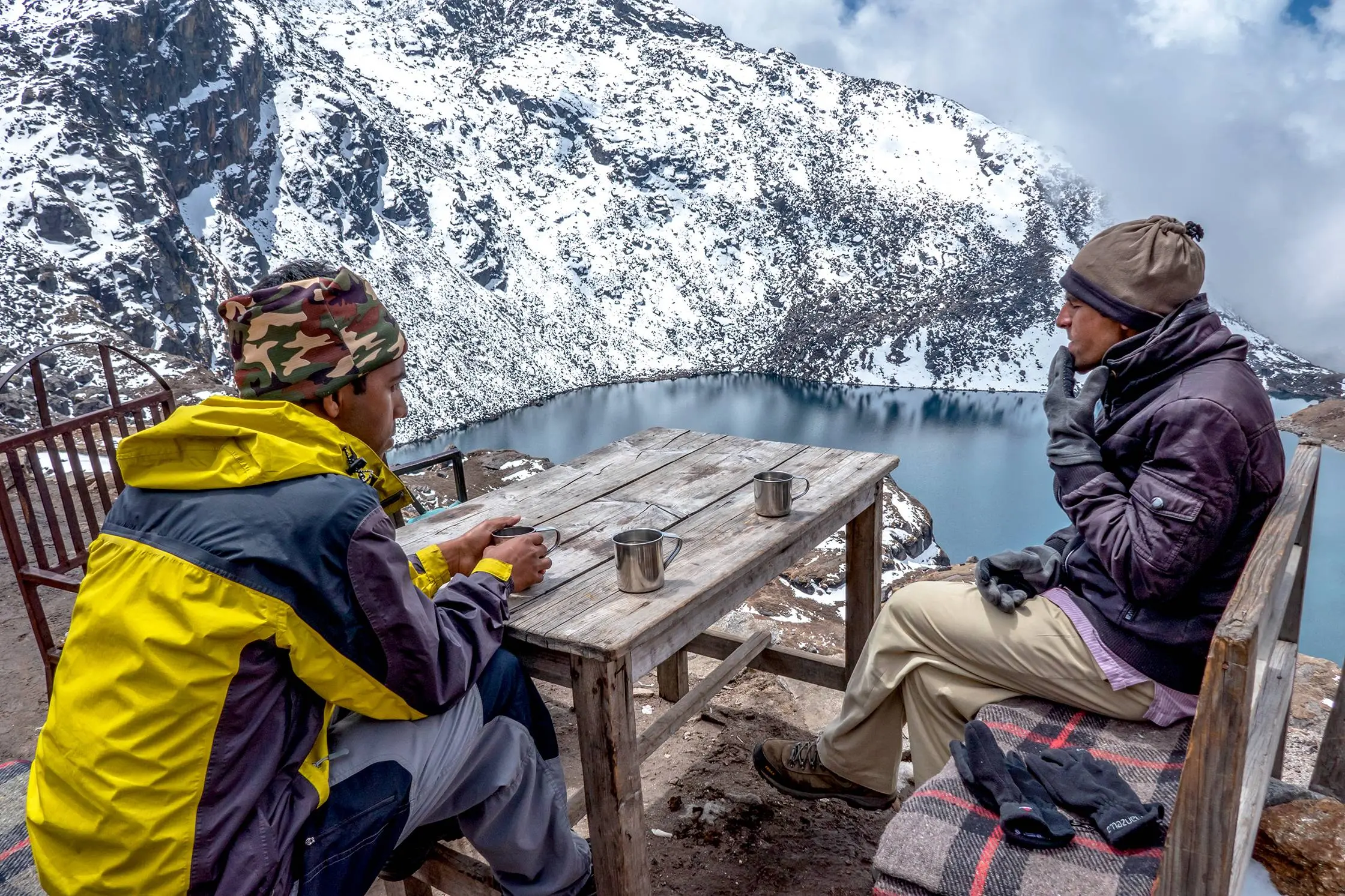
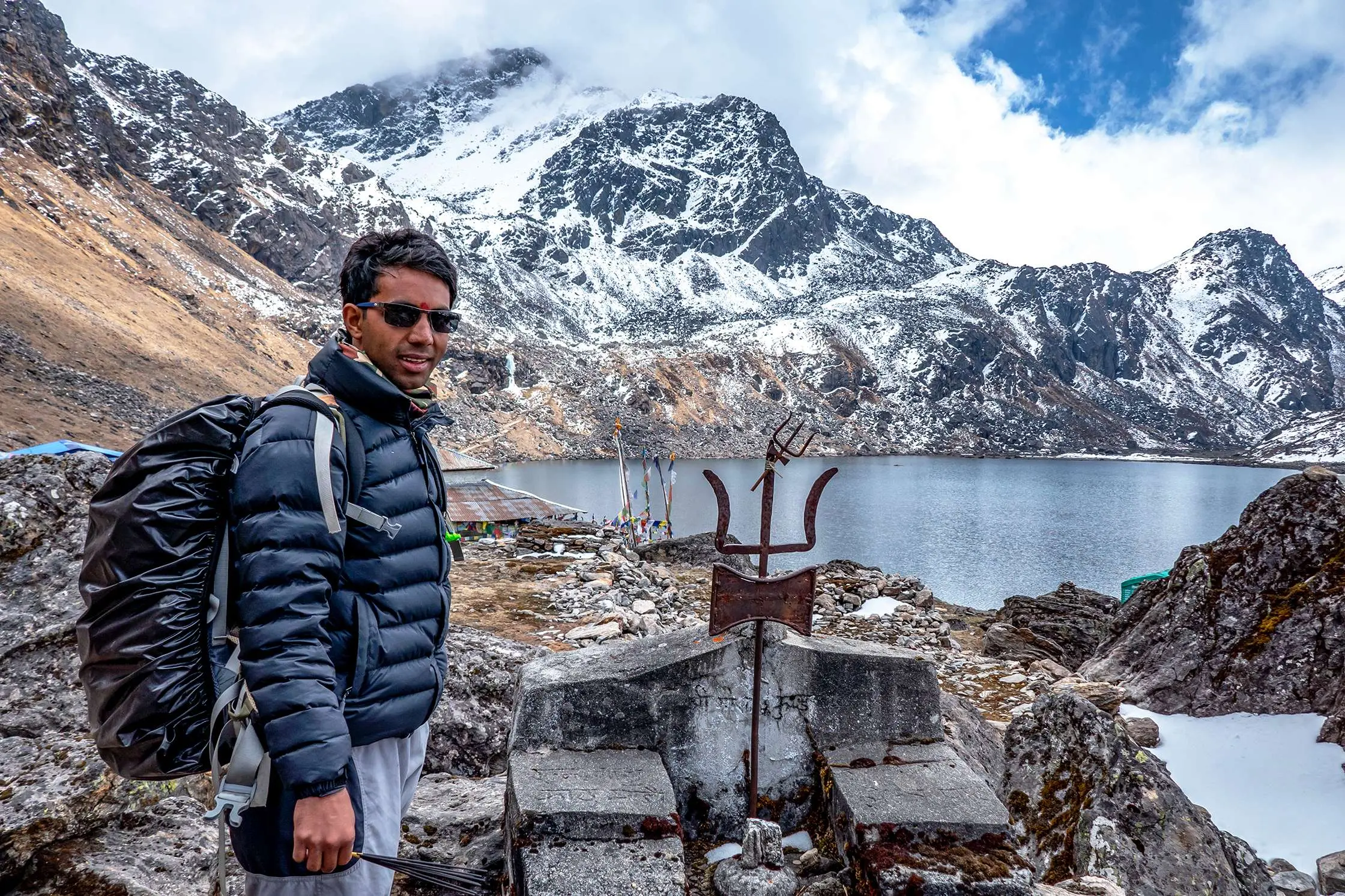
After hiking for approximately two more hours, we will arrive at a temple called Sakyamuni, which embodies Hindu and Buddhist values. In another half hour, we will reach the first lake, Saraswati Kunda, followed by Bhairav Kunda, and finally, the sacred Lake Gosaikunda. This lake is an important pilgrimage site for both Hindus and Buddhists. In the center of the lake, hidden underwater, lies a black rock believed to be the shrine of Lord Shiva. According to legend, Shiva used his trident (Trishul) to strike the ground and create the lake to quench his thirst after consuming poison. Hundreds of pilgrims worship and bathe in the lake each August during the fullmoon festival, reflecting their deep cultural and spiritual traditions.
It takes about 40 minutes to walk around the lake. Only a handful of tea houses are in the area, and the resources are scarce, but we will find a place to stay overnight.
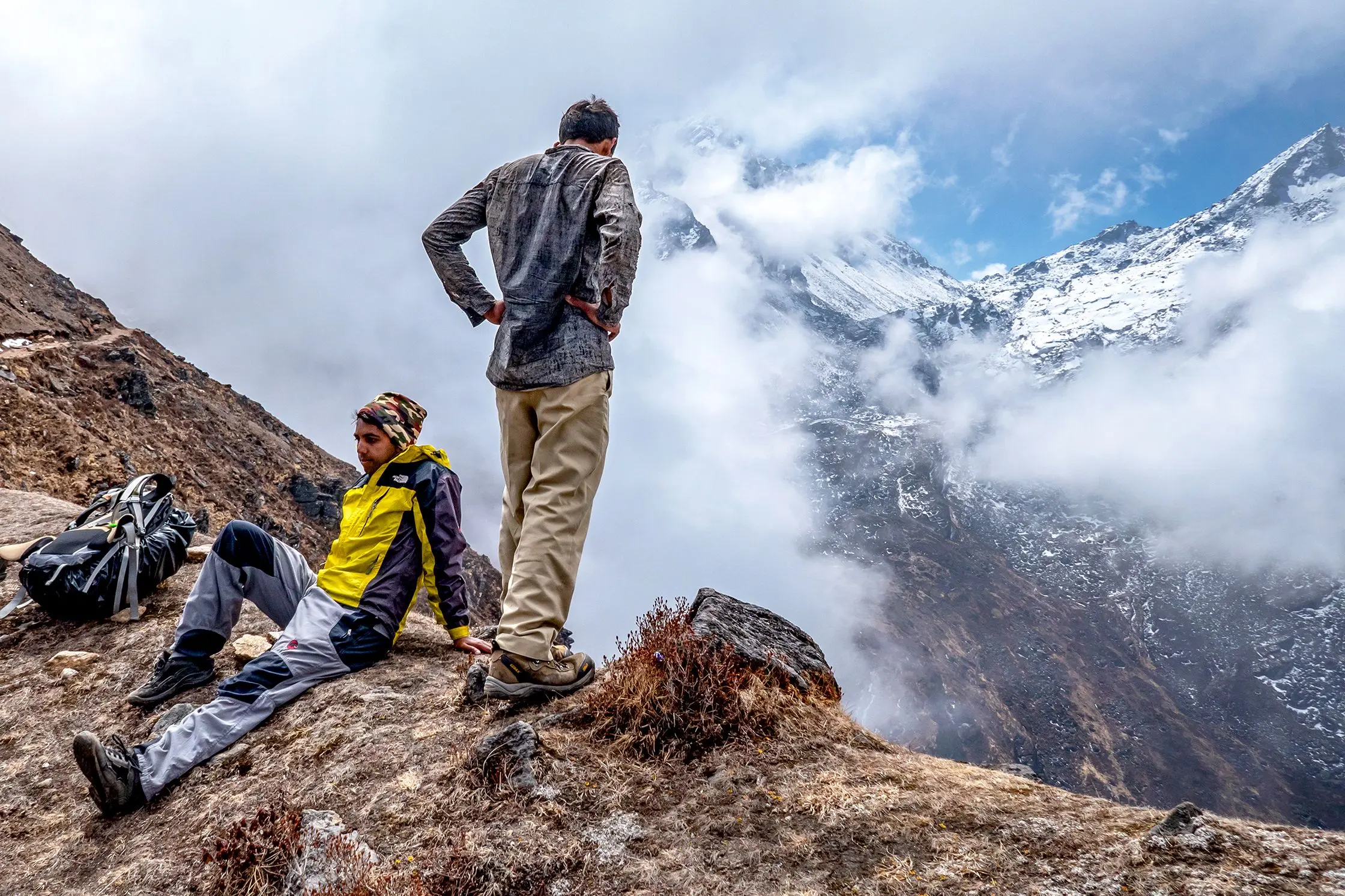
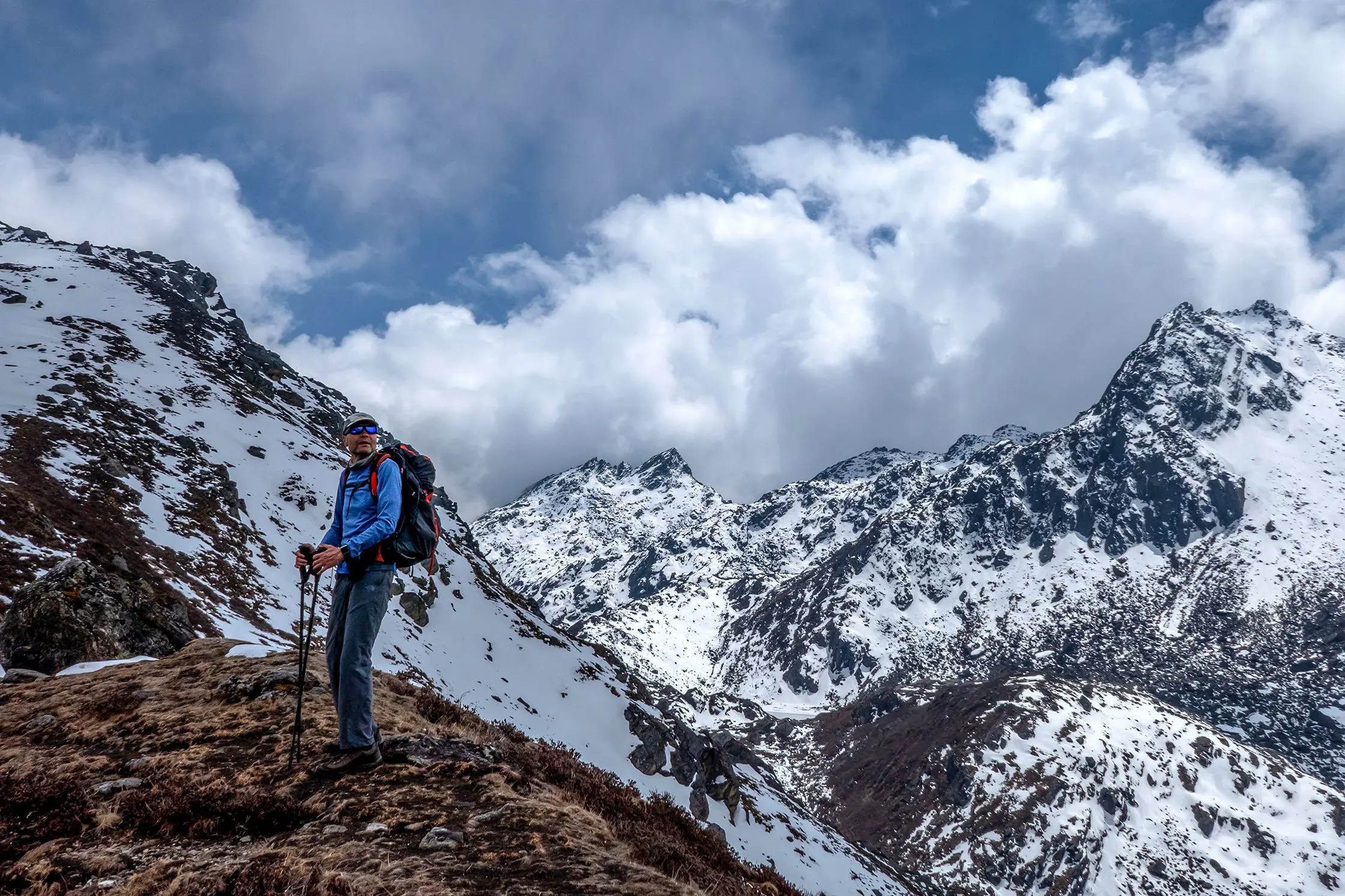
To reach Ghopte (3530m) from Gosaikunda (4380m), we must cross the Lauribina La, a high-altitude pass at 4610 meters. This trek is challenging yet offers stunning views of the mountain landscapes. Leaving behind the sacred Gosaikunda Lake, we will trek along rugged trails, passing several small glacial lakes until we reach the foothills of the Lauribina La. The trail leading to the Pass is steep but offers spectacular scenery, including breathtaking views of Manaslu Peak (8163m), Ganesh Himal (7422m), and Langtang Lirung (7227m) from a new angle.
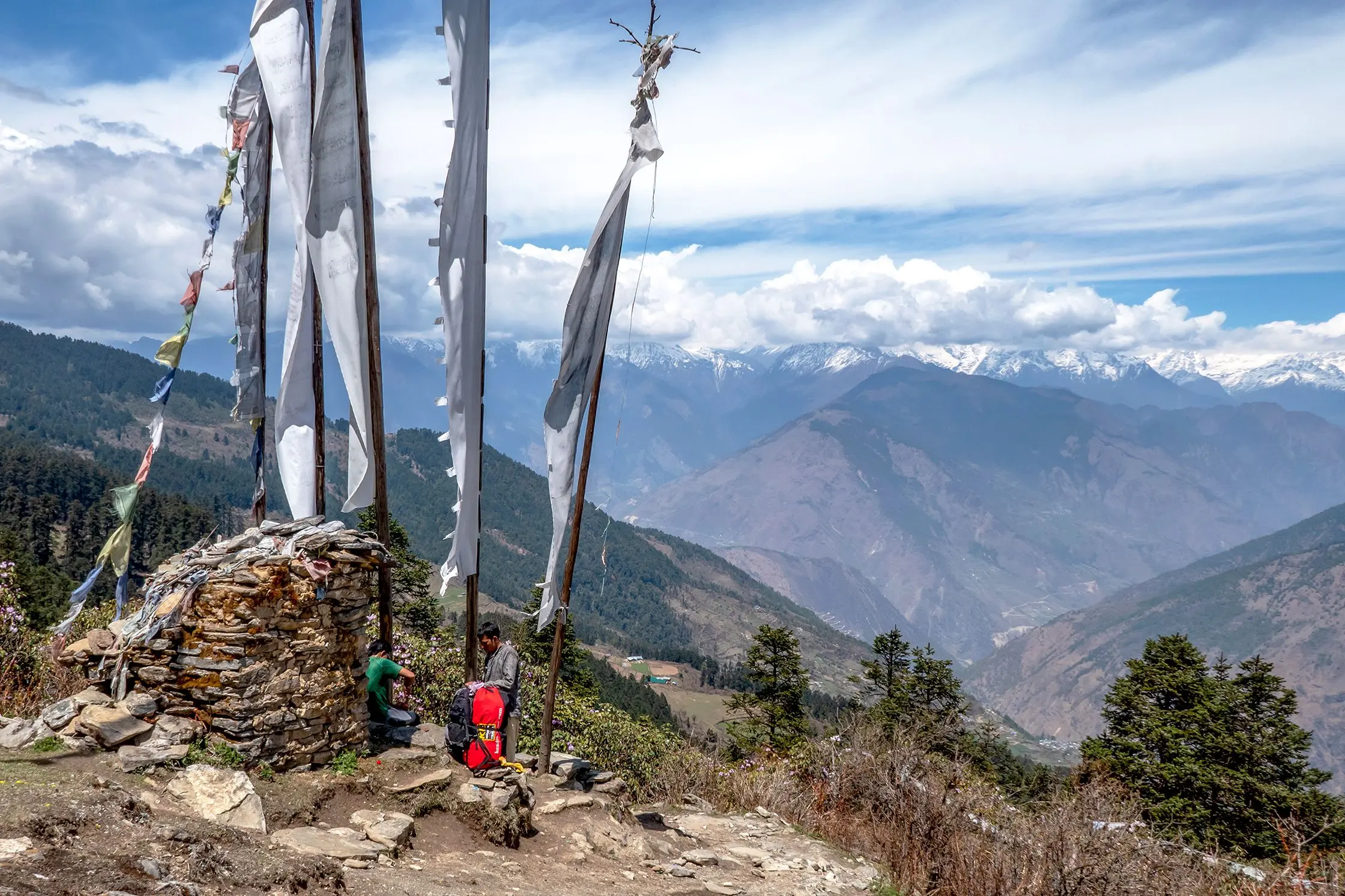
After Lauribina La, the trail descends steeply to High Camp (4240m) and the settlement of Phedi. Ahead of Phedi, we shall trek on an easier trail past meadows, alpine vegetation with pine and fir trees, caves, and many Buddhist prayer flags before reaching a small settlement of Ghopte. Overnight at the tea house in Ghopte.
We will traverse a trail through forests filled with pine and rhododendron trees, navigating rocky paths that lead us up and down toward Thadepati. The ascent is steep as we climb to the summit of Thadepati Pass (3690m), where we will be rewarded with magnificent views of Ganesh Himal (7422m) and the surrounding Langtang Mountains. After enjoying the vista, we will descend steeply from the pass's summit and enter the Helambu region. The trail will take us through dense forests to Mangen Goth (3265m), and after a short walk, we will pass Kyuola Bhanjyang (3335m). Our route will take us in and out of the southern boundary of Langtang National Park as we finally reach Kutumsang. Overnight at the tea house in Kutumsang.
After a brief ascent, we will arrive at Gul Bhanjyang, a charming traditional hill village. From there, we will ascend to Thorong Danda (2500m) along a vast, dusty road before continuing a rocky, steep trail through Chipling village to Pati Bhanjyang (1760m). From Pati Bhanjyang, we will gradually descend for another 30 minutes to reach Chisapani, renowned for its breathtaking views of several mountains. Overnight at the tea house in Chisapani.
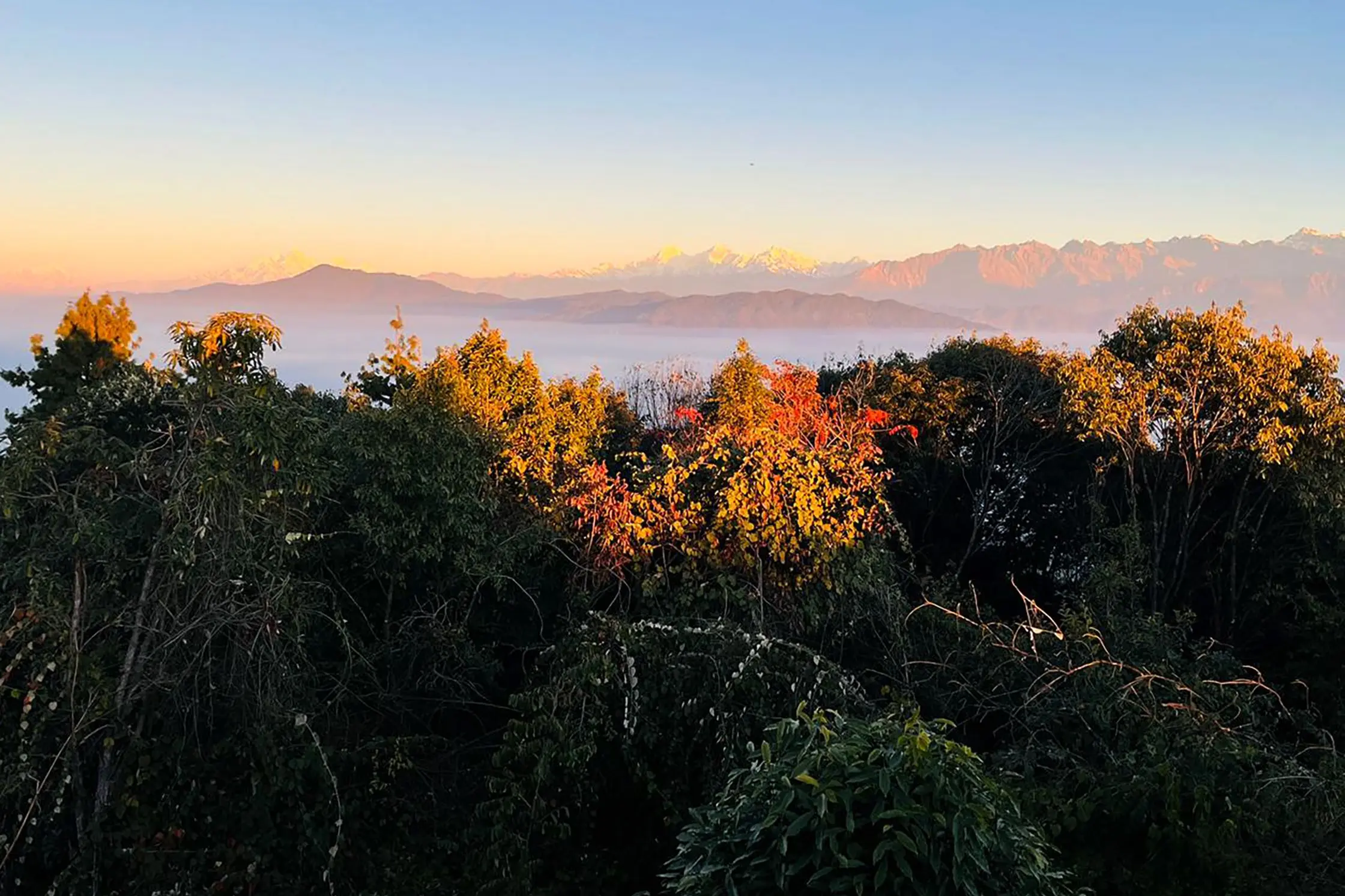
The trek to Sundarijal spans 10.5 km and takes approximately 4 to 5 hours to complete. The drive to Kathmandu from Sundarijal is around one hour. It's best to wake up early to experience the breathtaking sunrise over the Ganesh Himal (7422m), Manaslu (8163m), Gaurishankar (7134m), the second-highest mountain in Rolwaling on the border with Tibet, Dorje Lakpa (6966m), and the Langtang Himalaya range.
The trek begins with a climb to the final pass, Borlang Bhanjyang (2440m). From there, you will descend steeply through the Tamang settlement of Mulkharka (1,800 m) and continue down to Sundarijal. Upon reaching Sundarijal, as per your choice, we can take a local bus or private transport to Kathmandu, which takes about one hour. We will enjoy a farewell dinner at a Nepali restaurant in Thamel in the evening. Overnight at a hotel in Kathmandu.
· Pick-up and drop-off service to and from the international airport, including transfers to and from the hotel as specified in the itinerary.
· Depending on the chosen package, one or two nights of hotel accommodation in Kathmandu and one night upon departure at a three-star hotel on a twin-sharing basis (with an upgrade option at additional cost) are included. This includes all existing taxes and breakfast, as outlined in the itinerary.
· A licensed, experienced, English-speaking trekking guide and their accommodation, meals, equipment, salary, and all applicable taxes are included. We can also provide guides who speak other languages upon request.
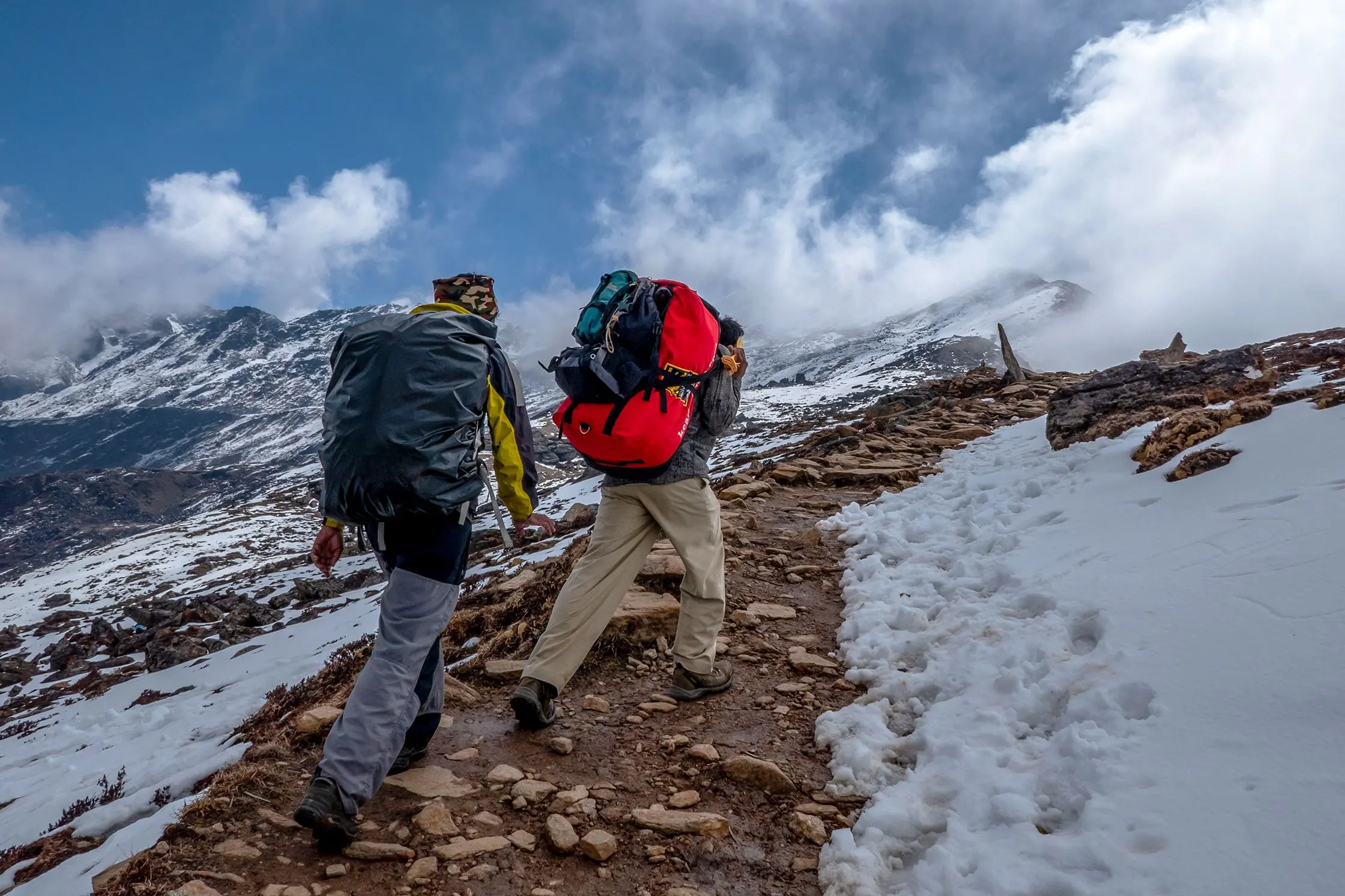
· Hiring a porter is optional; you may decline this service. However, most clients prefer to have a porter, so our packages include one trekking porter or Sherpa. For larger groups, we can arrange for additional porters if needed. If you decide not to use a porter, we will deduct the associated costs from the package price, ensuring you only pay for what you receive.
The porter will carry your backpack or duffle bag during the trek. Please use soft duffle bags without wheels, as porters carry them on their backs. According to the rules and regulations set by the Nepal Workers Union, one porter can be assigned to two people and can carry a maximum of 25 kg. The cost of the porter's accommodation, meals, equipment, salary, and all applicable taxes are included in the package.
· The price of the package includes the cost of insurance for Nepalese staff, trekking guides, and porters.
· Trekker’s Information Management System (TIMS) and Langtang National Park Entry Permit (LNPEP) fees.
· All accommodation during the trek should be in the area's best hotels/tea houses (differing according to the price you wish to pay and availability).
· Transportation costs to and from Syabru Besi, located in Langtang National Park, as well as the journey from Sundarijal to Kathmandu, can be arranged by private vehicle (Jeep, Land Cruiser, or Van, depending on the size of the group) or by public bus. You can choose whichever option you prefer, which will be detailed in the itinerary.
· All foods during the trek: Breakfast, Lunch, and Dinner; you may consume any item on the menu. However, we kindly ask you not to waste food, as transporting it in high-altitude rural areas can be challenging and costly.
· Desert or Seasonal Fruits (where available), coffee, hot chocolate, hot water, or tea during the trek.
· Due to cold weather in the mountain region, hot water may be limited; however, in some cases, buckets of hot water can be provided upon request.
· Where applicable, the cost of the Kathmandu Valley guided sightseeing tour is included, as mentioned in the itinerary.
· Where applicable, the cost of the Kathmandu Valley tour with a private vehicle is included, as mentioned in the itinerary.
· Where applicable, the costs of other programs are included in the service as mentioned in the itinerary.
· As detailed in the itinerary, a farewell dinner at a Nepalese restaurant in Kathmandu is included before departure, depending on the chosen package.
· All government taxes and office service charges are included.
These costs are usually your responsibility. Depending on the selected itinerary, some or all these costs are excluded from the quoted price of the package.
· A Nepali Tourist Visa (Mandatory) must be arranged and paid for directly by the client. A 15-day visa costs 30 USD, a 30-day visa costs 50 USD, and a 90-day visa costs 125 USD (check the official government website for updated prices). Within two weeks of your arrival in Nepal, please complete the Online Visa Application and carry a printed copy with you: https://nepaliport.immigration.gov.np/
· Personal Travel and Health Insurance (Mandatory), which includes emergency rescues and evacuation coverage, including helicopter rescue, must be arranged and paid for directly by the client.
· Our service does not include emergency rescue evacuations; you must carry your own Travel and Health Insurance.
· Additional costs due to unforeseen circumstances, roadblocks, flight cancellations, or any situation beyond our control are not covered.
· Any expenses arising due to unforeseen situations like personal sickness, natural calamities, political strikes, etc.
· International airfare to and from Nepal is not included in our service.
· Helicopter charter flights are not included in our services. We can arrange them for you, but additional costs will apply.
· Lunch and dinner at the hotels in Kathmandu before and after the trek are not included, except for the farewell dinner in Kathmandu.
· If you would like to extend your stay in Nepal beyond the itinerary provided, we are happy to assist you with the necessary arrangements. Please note that any hotel accommodation, transportation, and other expenses during your extra days will be your responsibility. However, on departure day, we will provide transportation from your hotel to the international airport. If you arrive earlier, we will pick you up at the airport and transfer you to your hotel.
· Additional nights of accommodation and meal expenses in Kathmandu due to changes in the scheduled itinerary.
· We do not cover KTM Valley sightseeing entrance fees outside the itinerary.
· Alcoholic beverages, soft drinks like Coke, and bottled mineral water are not included; however, bottled water may be provided during long-distance transportation.
· Expenses of a personal nature include but are not limited to laundry, table drinks, beverages, confectionery, snacks, telephone bills, tips for room attendants and drivers, and personal clothing, including rental of sleeping bags and other additional equipment you might need on the trek.
· TMT does not cover the costs of a hot shower, Wi-Fi, and charging your electronic devices during the trek or any extra services you use that are not part of the package price.
· Tips to your guide, porters, driver, and other field staff are not included.
· Any other expenses or charges not mentioned in the Included Services and Items section.
Cost of packages for Langtang Region.
The cost of trekking packages in the Langtang Region varies based on several factors, including trek duration, the number of trekkers, whether the trip is private or on a group basis, the season, and porter service requirements, but guides are an integral part of this trek. The mode of transportation and type of accommodation also vary. The Langtang Region has several accommodation facilities: Tea Houses, Guest Houses, and Hotels. All the rooms are twin-sharing arrangements during the journey, so you must share them with other trekkers. You may, however, reserve a separate room, but it will be more expensive. Prices for these treks generally range from 850 USD to 1800 USD per person (based on a single person). Also, the larger your group, the lower the per-person cost, as some costs could be shared, like transportation by private vehicle or accommodation.
TMT specializes in all-inclusive trekking packages from Kathmandu, some with heritage sightseeing tours. Depending on accommodation, these packages can be budget-friendly adventures or luxurious getaways. We can also provide individually tailored packages to match your interests and preferences. Don't hesitate to contact the TMT team for a personalized quote based on your itinerary and preferred options.
The cost of these all-inclusive packages typically includes transportation from and to the international airport from your hotel, accommodation at the hotels in Kathmandu and in local lodges or guesthouses, meals (except lunch and dinner in Kathmandu), and the services of a licensed trekking guide and porter. We also include the cost of permits, Langtang National Park Entry Permit Fee (LNPEP), Trekking Permit (TIMS), and all the applicable local taxes. Please refer to the Included/Excluded Services and Items section for details.
Using an agency like TMT offers numerous benefits that make your trip much more comfortable. When you book a trekking package with us, you won't have to worry about where to go, how to get there, or finding a place to stay overnight, especially during peak seasons. Traveling with a licensed local guide is also significantly safer. Do you have experience with high-altitude trekking? Are you familiar with how to recognize the signs of high-altitude sickness and how to manage it? By choosing TMT, the trek becomes a shared responsibility between you and the agency.
Where does the money you pay to the agency go? Almost all of it goes "back to the mountain," so to speak. Only a tiny fraction of that money is spent on office expenses.
 >
> >
>